
Lawn Maintenance in New Zealand is about more than keeping grass short. It is a practical routine that protects your outdoor space from weeds, moss, compaction, dry summers, wet winters and uneven growth. From my experience, the lawns that look best long-term are rarely the ones cut the shortest. They are the ones cared for consistently, with mowing, soil care, water management and seasonal timing working together.
A good New Zealand lawn has to handle a lot. Auckland and Northland lawns may grow strongly for much of the year, while Canterbury, Otago and inland areas can face frost, dry spells and slower winter recovery. In addition, coastal wind, clay soil, shade, pets, kids and high foot traffic can all change the right maintenance approach.
What Is Lawn Maintenance?
Lawn Maintenance is the routine care that keeps grass healthy, safe and tidy. It includes mowing at the right height, trimming edges, watering when needed, feeding soil, removing weeds, aerating compacted ground and repairing bare patches so a New Zealand lawn can handle weather, foot traffic and seasonal growth.
Table of Contents
- What Lawn Maintenance Means in New Zealand
- Why New Zealand Lawns Need Local Care
- Seasonal Lawn Maintenance Calendar
- The Core Lawn Maintenance Process
- DIY vs Professional Lawn Maintenance
- Lawn Maintenance Checklist for Homeowners
- Mowing, Edging and Grass Height
- Soil Health, Fertiliser and Aeration
- Weed, Moss and Pest Control
- Watering and Drought-Smart Lawn Care
- Berms, Edges and Council-Facing Admin
- People Also Ask
- Expert Q&A
- Conclusion
What Lawn Maintenance Means in New Zealand
Lawn Maintenance is the regular work that keeps grass dense, even and resilient. In simple terms, it combines routine surface care with deeper soil and root care. Mowing gives the lawn a tidy finish, but soil structure, nutrients, drainage and weed pressure decide whether the grass stays healthy.
A complete lawn maintenance plan usually includes:
- Mowing at a suitable height
- Trimming edges around paths, fences, kerbs and garden beds
- Removing sticks, leaves and debris before mowing
- Checking for weeds, moss, pests and disease
- Feeding with lawn fertiliser when growth conditions suit
- Watering deeply but not wastefully
- Aerating compacted areas
- Overseeding thin patches
- Managing thatch build-up
- Disposing of green waste responsibly
However, the right mix depends on your property. A small townhouse lawn in Auckland may need frequent light mowing and clean edging. A larger lifestyle property may need ride-on mowing, seasonal weed management and more attention to drainage. Meanwhile, shaded lawns near fences or large trees may need moss prevention and lighter wear.
In practice, the mistake many homeowners make is treating every lawn the same. A lawn under heavy shade should not be managed like a sunny kikuyu verge. Similarly, a lawn on compacted clay needs aeration and drainage support before fertiliser can do its best work.
Why New Zealand Lawns Need Local Lawn Maintenance
New Zealand lawns grow under varied conditions. Therefore, a local Lawn Maintenance plan should consider climate, grass type, rainfall, council rules and soil condition. A generic “mow weekly and water often” approach can waste time and may even weaken the lawn.
According to the NIWA New Zealand Drought Monitor, drought conditions across New Zealand are tracked using the New Zealand Drought Index, which includes indicators such as soil moisture deficit and rainfall patterns. This matters for lawn care because dry periods affect when to mow, whether to fertilise and how much recovery stress a lawn can handle.
In wet regions or during winter, the problem can be the opposite. Lawns may hold too much moisture, especially on clay soils. As a result, moss, fungal patches and compaction can appear. When grass is wet, mowing can leave wheel ruts, tear grass blades and spread disease. Therefore, timing matters as much as frequency.
New Zealand lawns also include different grass types. Cool-season grasses such as ryegrass and fescue are common in many areas because they suit cooler and temperate conditions. In warmer northern areas, kikuyu can be common because it grows aggressively and tolerates wear. However, kikuyu can also creep into garden beds and edges if it is not managed.
A strong maintenance plan should answer five practical questions:
- What grass type is growing?
- Is the lawn sunny, shaded, sloped or compacted?
- Does the lawn drain well after rain?
- Is the property used by kids, pets, tenants, staff or customers?
- Are there local water restrictions, berm responsibilities or green waste rules?
Once these questions are clear, lawn care becomes less reactive. Instead of fixing problems after they become visible, you can prevent them earlier.
Seasonal Lawn Maintenance Calendar for New Zealand
Lawn Maintenance should follow seasonal growth patterns. In New Zealand, spring and autumn are often the most useful times for repair and improvement. Summer focuses on stress management, while winter is about avoiding damage.
| Season | Main Lawn Condition | Best Maintenance Focus | What to Avoid |
| Spring | Grass growth increases as soil warms | Regular mowing, fertilising, weed control, overseeding and light renovation | Cutting too short after winter |
| Summer | Heat, dry wind and water stress can increase | Higher mowing, deep watering where allowed, sharp blades and light feeding only if grass is active | Heavy fertiliser during drought stress |
| Autumn | Soil is still warm and rainfall often improves | Aeration, overseeding, fertiliser, moss prevention and patch repair | Waiting too long to repair bare areas |
| Winter | Growth slows, soil can become wet and compacted | Light mowing only when needed, debris removal and drainage checks | Mowing wet ground or heavy traffic on soft soil |
This seasonal rhythm is important because grass responds best when it is actively growing. For example, overseeding works better when soil temperature and moisture support germination. Likewise, aeration is more useful when the lawn has time to recover.
From my experience, autumn is often underrated. Many people focus on spring, but autumn gives lawns a chance to recover from summer stress before winter slows growth. As a result, autumn maintenance can reduce moss, bare patches and weak spring growth.
The Core Lawn Maintenance Process
A practical Lawn Maintenance visit should follow a clear process. This keeps the work tidy and helps spot problems early.
First, inspect the lawn before mowing. Look for wet areas, pest damage, mushrooms, moss, weeds, bare soil, uneven growth and objects hidden in the grass. This step protects the mower and prevents small issues becoming bigger ones.
Next, clear debris. Sticks, stones, toys and fallen branches can damage mower blades. In addition, they can become safety hazards if struck by machinery.
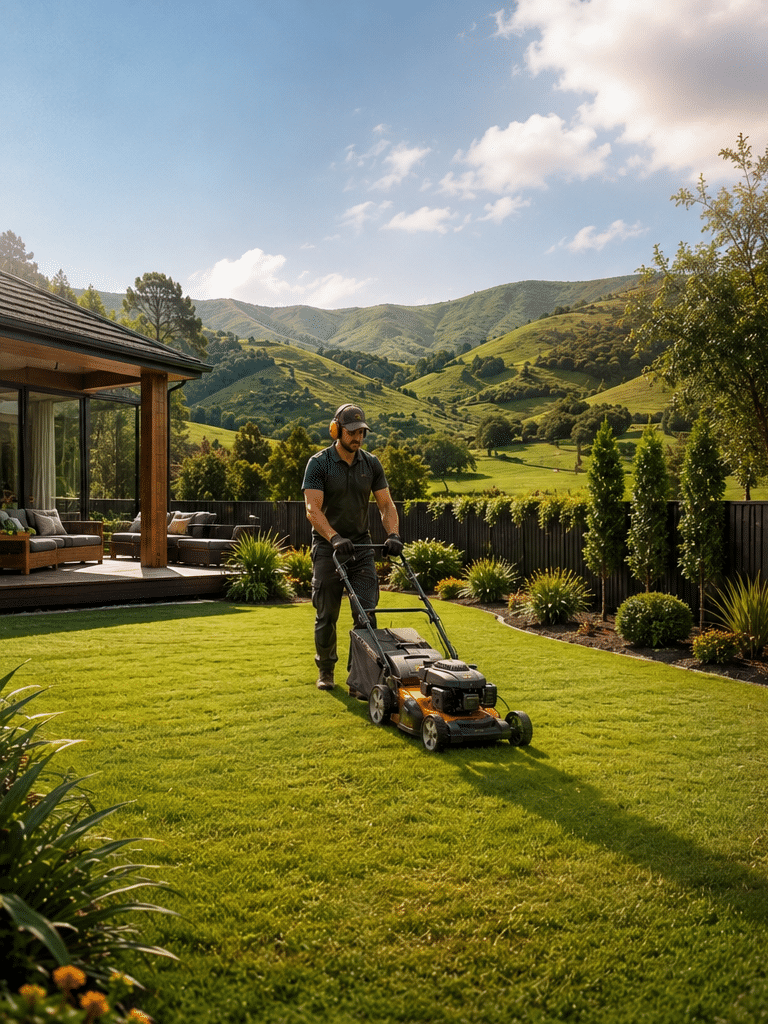
Then, mow according to grass condition, not just the calendar. During active growth, a lawn may need mowing every week or fortnight. During dry or cold periods, it may need less frequent cutting. A good rule is to avoid removing too much leaf in one mow, because scalping weakens the plant and exposes soil to weeds.
After mowing, trim the edges. Edging makes a lawn look cared for even when the grass itself is simple. It also keeps kikuyu and other creeping grasses away from garden beds, paths and driveways.
Finally, review what the lawn needs next. Does it need feeding, aeration, weed treatment, irrigation adjustment or repair? This is where good maintenance becomes strategic rather than cosmetic.
DIY vs Professional Lawn Maintenance
Some homeowners can manage their own lawn well. However, others benefit from scheduled help, especially when time, equipment, green waste or consistency is a problem. The right option depends on your budget, lawn size and expectations.
| Option | Best For | Advantages | Limitations |
| DIY Lawn Maintenance | Small lawns and confident homeowners | Lower direct cost, flexible timing, full control | Requires equipment, time, storage, skill and consistency |
| Occasional Contractor | Overgrown lawns, one-off clean-ups or seasonal help | Useful for catch-up work and heavy mowing | May not fix ongoing soil, weed or drainage issues |
| Scheduled Professional Lawn Maintenance | Busy households, rental properties, commercial sites and presentation-focused homes | Consistent finish, planned care, better issue spotting and less weekend work | Higher cost than DIY, needs clear service expectations |
For many New Zealand properties, the best approach is a hybrid. You might handle watering and basic debris removal, while a professional manages mowing, edging, weed control and seasonal renovation. This works especially well when the lawn is visible from the street or used by customers, tenants or guests.
Lawn Maintenance Checklist for Homeowners
Use this numbered checklist before starting a new maintenance routine or engaging a service provider.
- Identify the lawn type. Check whether the grass is ryegrass, fescue, kikuyu, couch or a mixed lawn.
- Assess sun and shade. Note areas under trees, near fences or beside buildings.
- Check drainage. Look for puddles, soft patches or moss after rain.
- Review soil compaction. Push a garden fork or screwdriver into the soil. If it is difficult, aeration may help.
- Set mowing height. Choose a height that suits the grass and season.
- Plan mowing frequency. Mow more often during strong growth and less during stress.
- Create an edging plan. Include paths, kerbs, fence lines, driveways and garden borders.
- Choose green waste handling. Decide whether clippings stay, get composted or are removed.
- Check weed pressure. Identify weeds before spraying or digging.
- Review water rules. Check local guidance before using sprinklers or irrigation.
- Schedule seasonal tasks. Add fertilising, aeration and overseeding to spring or autumn.
- Record problem areas. Track bare patches, moss, pests and recurring dry spots.
This checklist helps avoid guesswork. It also gives a lawn care provider clear information, which usually leads to better results.
Mowing, Edging and Grass Height
Mowing is the most visible part of Lawn Maintenance, but it is also one of the easiest tasks to get wrong. Cutting too short may look tidy for a few days, but it can weaken roots, dry the soil and let weeds germinate. On the other hand, letting grass grow too long can create a messy finish and make the next mow harder.
New Plymouth District Council’s lawn care guidance notes that longer, healthier grass can make it harder for sun-loving weeds to grow, while sharp mower blades help prevent bruised and torn leaf blades. It also notes that mowing dry lawns can reduce disease spread and soil compaction.
For most home lawns, the goal is to remove a modest amount at each mow. If the grass is overgrown, raise the mower height and reduce it gradually over two or three cuts. This is especially important after holidays, rain delays or strong spring growth.
Edging is equally important. A clean edge can make an average lawn look well maintained. It also prevents creeping grass from moving into paving joints and garden beds. In my experience, regular edging saves time later because it stops borders from becoming a separate restoration job.
For kikuyu lawns, edging should be more regular because kikuyu spreads by runners. For fine lawns, edging can be gentler, but it still matters for presentation.
Soil Health, Fertiliser and Aeration
Healthy lawn growth starts below the surface. If soil is compacted, water and air cannot move easily into the root zone. As a result, the lawn may look dry even after rain. It may also develop moss, shallow roots and patchy growth.
Aeration helps by creating channels in the soil. These holes allow air, water and nutrients to reach the roots. Coring is especially useful on lawns used for parking, play areas or frequent foot traffic. It is also useful on clay soils, which are common in many New Zealand suburbs.
Fertiliser should be used with care. More fertiliser does not always mean a better lawn. In fact, overfeeding can create soft, fast growth that needs more mowing and uses more water. Therefore, apply fertiliser when the lawn is actively growing and when rain or irrigation can help move nutrients into the soil without causing runoff.
A balanced Lawn Maintenance plan should include:
- Soil testing where results are poor or inconsistent
- Slow, steady feeding rather than sudden overfeeding
- Aeration for compacted areas
- Topdressing where surface levels are uneven
- Overseeding where turf is thin
- Thatch control where dead organic material blocks water and air
If you are not sure what the lawn needs, start with soil and drainage before spending heavily on fertiliser. A weak root zone cannot make full use of nutrients.
Weed, Moss and Pest Control in Lawn Maintenance
Weeds are not just a cosmetic issue. They compete with grass for light, space, water and nutrients. Bare patches, scalped grass, compacted soil and poor drainage all create opportunities for weeds to spread.
According to MPI gardening biosecurity guidance, weeds and other pests can damage New Zealand’s economy, environment and way of life, and gardeners play a role in protecting the country from biosecurity threats. MPI also advises gardeners to control weeds, dispose of green waste properly and stay alert for pests and diseases they have not seen before.
This is especially relevant near reserves, bush edges, waterways and lifestyle blocks. Lawn clippings and weed fragments should not be dumped on public land. Some weed seeds and fragments can survive poor disposal practices, so green waste should be handled responsibly.
Moss often appears in damp, shaded or compacted lawns. However, moss is usually a symptom, not the main problem. If you remove moss without fixing shade, drainage, soil acidity or compaction, it often returns.
For chemical weed control, always identify the weed first and follow the product label. The EPA’s glyphosate guidance explains that glyphosate is regulated in New Zealand, should be used according to instructions and should not be put down stormwater drains or used near waterways unless permitted for that product and user.
Where possible, combine weed treatment with better lawn density. A thick lawn is one of the best long-term weed controls because it shades the soil and leaves less room for unwanted plants.
Watering and Drought-Smart Lawn Maintenance
Watering is not about keeping a lawn bright green every day. Instead, it should support root health without waste. Deep, occasional watering is usually better than frequent shallow watering because it encourages deeper roots. However, local rules and weather conditions must come first.
In Auckland, Watercare states that water restrictions focus on limiting outdoor water use to ensure enough water for residential and business customers. It considers factors such as dam storage, expected demand, short-term weather outlook and the risk of moving in and out of restrictions before recommending restrictions to Auckland Council.
Therefore, New Zealand homeowners should check local council or water provider guidance before using sprinklers or irrigation, especially in dry months. This is an administrative step, not legal advice. Rules can vary by region and can change with water supply conditions.
Drought-smart Lawn Maintenance includes:
- Mowing slightly higher in hot weather
- Avoiding heavy fertiliser when grass is drought-stressed
- Watering early morning when permitted
- Using trigger nozzles or efficient irrigation
- Letting some lawns brown off temporarily during severe dry periods
- Repairing drought damage in autumn rather than forcing growth in heat
A brown summer lawn is not always dead. Many grasses enter dormancy during stress and can recover when rain returns. However, repeated scalping, heavy traffic and shallow watering can make recovery harder.
Berms, Edges and Council-Facing Admin Tasks
In New Zealand, the strip of grass between a property and the road is often called a berm or verge. Maintenance expectations can vary by council, street type and location. Therefore, homeowners should check local guidance rather than assuming one national rule applies.
Waikato District Council explains that a berm is the strip of grass or land between a property and the road, and its urban berm guidance says property owners mow grass on the berm while council handles certain council-planted trees and some berms outside council properties.
New Plymouth District Council also describes situations where council mows some berms, such as where long grass could create a traffic visibility problem or where grass exceeds a stated height in certain areas.
For homeowners, this means Lawn Maintenance may include more than the private lawn inside the fence. It may include kerb edges, footpath borders, driveway sightlines and overhanging plants. For rental or commercial properties, it is useful to record who is responsible for each area.
Again, this is administrative guidance, not legal advice. If there is a dispute or unusual property boundary issue, check the relevant council or a qualified adviser.
What a Reliable Lawn Maintenance Service Should Include
A reliable service should do more than arrive, mow quickly and leave. The best results come from consistency, observation and clear communication.
A good service should include:
- A basic lawn condition check
- Mowing suited to grass height and season
- Neat line trimming and edging
- Safe handling of obstacles and debris
- Clipping management
- Weed and moss observations
- Advice on watering, feeding or repair when needed
- Clear scheduling
- Transparent pricing and scope
For commercial properties, schools, rental homes and body corporate sites, reporting can also help. A short note after each visit can document overgrown areas, broken irrigation, pest signs, access issues or green waste needs. This creates accountability and prevents small maintenance issues becoming costly clean-ups.
People Also Ask About Lawn Maintenance in New Zealand
1. How often should I mow my lawn in New Zealand?
During strong spring and early summer growth, many lawns need mowing every 1 to 2 weeks. However, in winter or drought conditions, mowing should be less frequent because growth slows and the grass is more vulnerable to damage.
2. What is the best time of year for Lawn Maintenance?
Spring and autumn are usually the best seasons for improvement work such as feeding, aeration and overseeding. Summer is more about protecting the lawn from heat stress, while winter maintenance should be light and careful.
3. Should I leave grass clippings on the lawn?
Fine clippings can return nutrients to the soil if the lawn is mown regularly and the clippings are not clumping. However, remove heavy clumps, weed seed heads or diseased material because they can smother grass or spread problems.
4. Why is my lawn full of moss?
Moss usually points to shade, poor drainage, compacted soil, low fertility or acidic conditions. Treating moss may improve appearance, but the long-term fix is to improve light, airflow, drainage and soil health.
5. Is professional Lawn Maintenance worth it?
Professional maintenance can be worth it if you lack time, equipment or consistency. It is especially useful for visible front lawns, rental properties, commercial sites and lawns with recurring weeds, moss or compaction.
Expert Q&A: Lawn Maintenance for Better Long-Term Results
1. What mowing height is best for New Zealand lawns?
The best height depends on grass type, season and use. As a general guide, avoid scalping and keep the lawn slightly higher during summer stress. Kikuyu can often tolerate lower mowing than ryegrass or fescue, but it still performs better when it is not repeatedly cut too short.
2. How do I repair bare patches in a lawn?
Start by finding the cause. Bare patches may come from pets, shade, compaction, pests, poor soil or heavy wear. Rake the area, loosen the soil, add a light layer of lawn soil, sow suitable seed, press it in gently and keep it moist until established.
3. When should I aerate my lawn?
Aerate when the lawn is actively growing and can recover, often in autumn or spring. Focus on compacted areas, high-traffic paths, clay soils and places where water runs off instead of soaking in.
4. Can Lawn Maintenance reduce weeds without chemicals?
Yes, but it takes consistency. Mowing at the right height, feeding appropriately, overseeding bare patches, improving drainage and reducing compaction all help grass outcompete weeds. Hand weeding can also work well when weed numbers are low.
5. What should I do after a dry summer?
Avoid aggressive renovation during peak stress. Once cooler weather and moisture return, rake out dead material, aerate compacted areas, overseed thin patches and apply a suitable fertiliser. Autumn recovery is often more effective than forcing growth during hot, dry weather.
Conclusion: Build a Lawn That Handles New Zealand Conditions
Lawn Maintenance works best when it is planned around local conditions, not just appearance. A healthy New Zealand lawn needs the right mowing height, clean edges, strong soil, sensible watering, seasonal feeding, weed control and timely repair. Therefore, the goal is not simply to cut grass. The goal is to build a lawn that can recover, compete with weeds and stay usable through changing weather.
For homeowners, landlords and businesses that want a tidy, healthier outdoor space without guesswork, explore trusted New Zealand lawn maintenance support and create a practical plan for your property.