
Professional Lawn Mowing is more than cutting grass short and hoping it looks neat. In New Zealand, lawns deal with changing seasons, coastal conditions, clay or sandy soils, fast spring growth, summer dryness, weeds, slopes, and busy household schedules. From my experience reviewing lawn care needs for Kiwi homes, the best results come from a planned approach: the right mowing height, sharp blades, clean edges, safe equipment use, and regular maintenance matched to local conditions.
For many homeowners, landlords, tenants, body corporates, and small businesses, a tidy lawn is part of kerb appeal. However, it also affects drainage, weed control, outdoor safety, and how usable a property feels. Therefore, this guide explains what professional lawn mowing includes, why technique matters, how often lawns should be mown in New Zealand, what to ask before booking a service, and how to choose a reliable provider without relying on hype.
Table of Contents
- Featured Definition: What Is Professional Lawn Mowing?
- Why Professional Lawn Mowing Matters in New Zealand
- What a Professional Lawn Mowing Service Usually Includes
- Professional Lawn Mowing vs DIY Lawn Mowing
- How Often Should You Mow a Lawn in New Zealand?
- New Zealand Lawn Conditions That Affect Mowing
- The Professional Lawn Mowing Process
- Safety, Compliance, and Responsible Lawn Care
- How to Choose a Professional Lawn Mowing Provider
- People Also Ask
- Expert Q&A Section
- Conclusion
What Is Professional Lawn Mowing?
Professional Lawn Mowing is a planned lawn care service where trained operators cut, edge, tidy, and maintain grass using suitable equipment and mowing methods. It helps New Zealand properties stay neat, safer, and healthier by matching mowing height, frequency, and cleanup to the season, grass type, site condition, and property use.
Why Professional Lawn Mowing Matters in New Zealand
A lawn may look simple, but it is a living surface. It responds to weather, foot traffic, soil compaction, shade, pests, weeds, and cutting habits. As a result, poor mowing can weaken the lawn, while careful mowing can support thicker growth.
In New Zealand, many lawns grow quickly in spring and early summer. However, growth can slow during dry summer periods, especially in exposed areas. In wetter regions, mowing can also become difficult because saturated soil and wet grass increase the risk of wheel marks, clumping, and uneven cuts. Therefore, Professional Lawn Mowing is useful because it brings judgement to each visit.
From my experience, the most common issue is not that people forget to mow. Instead, it is that they mow too low, mow when the grass is too wet, or leave edges and clippings unmanaged. Over time, this can create patchy areas, moss, weeds, and a tired-looking outdoor space.
Professional mowing also matters for public-facing areas. For example, rental properties, commercial frontages, childcare centres, small offices, and shared residential spaces often need a consistent appearance. A clean lawn signals care. In contrast, overgrown grass can make a property feel neglected even when the building itself is well maintained.
In some parts of New Zealand, berms are also part of the conversation. Auckland Transport explains that the berm is the grass area between a property boundary and the street, and property owners are generally responsible for mowing the berm outside their property as part of general land maintenance. You can read more through Auckland Transport’s berm maintenance guidance.
What a Professional Lawn Mowing Service Usually Includes
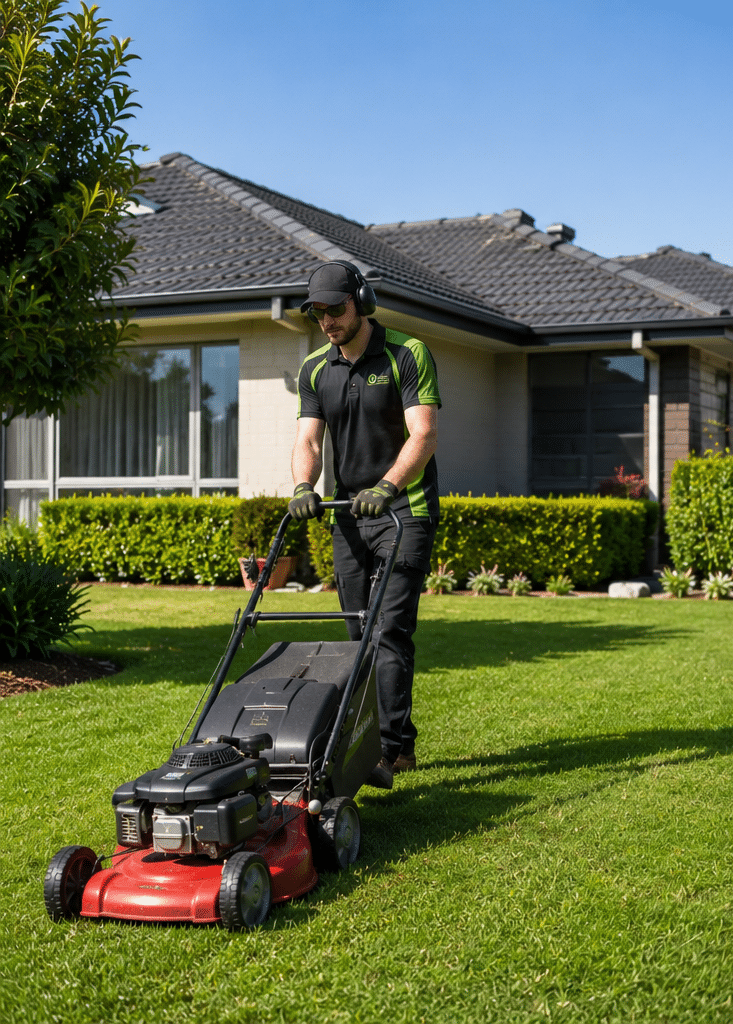
Professional Lawn Mowing can vary by provider, but a strong service normally includes more than a quick cut. At minimum, it should cover mowing, edging, basic tidy-up, and advice when obvious lawn issues appear.
A professional operator will usually inspect the area before starting. This matters because hidden objects, sprinkler heads, uneven ground, children’s toys, stones, and pet waste can affect safety and quality. Then, they choose the right mower height and mowing pattern.
A standard service may include:
- Lawn mowing with a push mower, self-propelled mower, ride-on mower, or commercial mower
- Edge trimming along paths, garden beds, driveways, fences, and kerbs
- Blowing or sweeping hard surfaces after mowing
- Clipping collection or mulching, depending on the lawn and client preference
- Basic weed visibility notes
- Light advice about bare patches, drainage problems, or mowing frequency
- Seasonal recommendations for mowing height and lawn stress
However, not every lawn needs the same treatment. A small townhouse lawn in Wellington may need a different process from a large lifestyle property in Waikato. Similarly, a shaded Auckland backyard may need a higher cut than a sunny front lawn in Canterbury.
This is where experience helps. A professional does not just ask, “How short should I cut it?” They ask, “What will help this lawn recover, thicken, and look tidy after the cut?”
Professional Lawn Mowing vs DIY Lawn Mowing
DIY mowing can work well for homeowners with the time, equipment, and confidence to maintain their lawn regularly. However, professional mowing becomes valuable when consistency, finish, safety, or time savings matter.
| Factor | DIY Lawn Mowing | Professional Lawn Mowing |
| Time commitment | Requires your own time each week or fortnight | Saves time and keeps a routine |
| Equipment | You buy, store, fuel, charge, and maintain gear | Provider brings suitable equipment |
| Finish | Depends on skill, blade condition, and patience | Usually cleaner edges and more even cut |
| Safety | You manage hazards and equipment risk yourself | Experienced operators follow safer work practices |
| Seasonal judgement | Easy to cut too short or too often | Mowing height can be adjusted to conditions |
| Best for | Small, simple lawns and hands-on owners | Busy households, rentals, businesses, larger or tricky lawns |
The key difference is not only convenience. It is consistency. Lawns usually look better when they are maintained before they become overgrown. Once grass grows too long, a single cut can shock the lawn, leave visible clumps, or expose yellow lower growth.
Therefore, Professional Lawn Mowing is often best for people who want a reliable result without managing the whole cycle themselves.
How Often Should You Mow a Lawn in New Zealand?
There is no single mowing schedule for every New Zealand lawn. However, many residential lawns need mowing every one to two weeks during active growth periods, then less often during slower growth. This is an estimate, not a rule, because local climate, rainfall, grass type, shade, soil, and lawn use all matter.
A practical seasonal guide looks like this:
| Season in New Zealand | Typical lawn behaviour | Suggested mowing approach |
| Spring | Fast growth, weeds active, soil often moist | Mow regularly, avoid cutting too low |
| Summer | Growth varies, dry stress can appear | Raise cutting height during hot or dry periods |
| Autumn | Growth continues but slows gradually | Keep mowing while growth remains active |
| Winter | Slower growth, wet ground, moss risk | Mow only when needed and avoid wet soil damage |
From my experience, the best guide is the “one-third” principle. In simple terms, avoid removing too much of the grass blade at once. If a lawn has become long, it is better to bring the height down gradually over more than one visit.
This approach helps reduce stress. It also prevents heavy clippings from smothering the lawn. In addition, it keeps the surface looking greener because you are not exposing too much pale lower growth.
New Zealand Lawn Conditions That Affect Mowing
New Zealand has varied lawn conditions. A good provider should understand that a lawn in Northland will not always behave like one in Otago. Likewise, coastal wind, shade, rainfall, and soil type can change the mowing plan.
Climate and Rainfall
Wetter periods can make grass grow quickly, but they can also make mowing harder. Wet grass bends rather than cuts cleanly. It can also clump under the mower and leave an uneven finish. Therefore, a professional may delay mowing after heavy rain or use a more careful cutting method.
In drier summer areas, cutting too low can expose soil and increase moisture loss. As a result, leaving the lawn slightly longer can help shade the soil and reduce stress.
Soil Type
Clay soils can become sticky and compacted when wet. Sandy soils may drain quickly but dry out faster. Therefore, mowing technique should change based on ground firmness. A heavy mower on soft ground may leave tracks, while a very low cut on dry soil may worsen browning.
Grass Type
Many New Zealand lawns include ryegrass, fescue, browntop, kikuyu, couch, or mixed grasses. Some grasses tolerate close mowing better than others. For example, kikuyu can be vigorous in warmer areas, while fine fescues may suit shaded or cooler spots. Because many lawns are mixed, a balanced mowing height often works better than an extreme short cut.
Shade and Moss
Shaded lawns grow differently. They often stay damp for longer and may thin out if mown too low. Therefore, shaded areas usually benefit from a higher cut, better airflow, and careful clipping control.
Weeds and Biosecurity
Weeds are not only a cosmetic issue. The Ministry for Primary Industries notes that weeds and other pests can affect New Zealand’s economy, environment, and way of life, and gardeners play a role in protecting the country from biosecurity threats. Learn more from MPI’s gardening and biosecurity guidance.
For lawn mowing, this means clippings and plant material should be handled responsibly. If a property has invasive weeds or seed heads, mowing can spread seed if the timing and cleanup are poor. Therefore, a professional should notice visible weed problems and recommend suitable next steps, while any herbicide or pest control decisions should follow product labels and appropriate local advice.
The Professional Lawn Mowing Process
A clear process gives better results. It also helps homeowners know what they are paying for. While every provider works slightly differently, a reliable Professional Lawn Mowing process usually follows these steps.
1. Site Check and Lawn Assessment
First, the operator checks the lawn area. They look for slopes, wet patches, debris, obstacles, uneven ground, pets, garden edges, sprinkler heads, and access points. This is important because mowing is both a lawn care task and a safety task.
2. Mowing Height Selection
Next, they choose a mowing height. A very short cut may look tidy for a few days, but it can weaken the lawn if conditions are dry, shaded, or already stressed. Therefore, a professional should adjust the height instead of using the same setting every time.
3. Edge Trimming
Edges make a major visual difference. Even when the lawn surface is neat, messy edges can make the whole yard look unfinished. Good edging along paths, kerbs, driveways, fences, and garden beds creates a cleaner frame.
4. Main Lawn Cut
The lawn is then cut in a controlled pattern. Professionals often vary mowing direction across visits to reduce rutting and encourage a more even finish. They also manage turns carefully, especially on damp or soft ground.
5. Clipping Management
Clippings may be caught, mulched, or removed depending on the lawn. Mulching can return organic matter when grass is dry and not too long. However, collection may be better when the grass is overgrown, wet, weedy, or likely to clump.
6. Final Blow-Down and Tidy
After mowing, hard surfaces should be cleared. This includes paths, patios, decks, driveways, and kerbs. A tidy finish is one of the easiest ways to tell whether the job was done with care.
7. Quick Condition Report
Finally, a good operator can point out practical observations. For example, they may mention moss, bare patches, drainage problems, scalped areas, weeds, or signs that the lawn needs aeration. This is not legal, building, or agronomy advice. It is practical maintenance feedback that can help the owner decide what to do next.
How to Onboard a Professional Lawn Mowing Service
Use this checklist before booking a recurring lawn mowing provider.
- Confirm the service area
Check that the provider services your suburb, town, or region. - Describe the property clearly
Share whether it is a small residential lawn, rental property, commercial frontage, berm area, lifestyle block, or shared outdoor space. - Ask what is included
Confirm mowing, edging, clipping removal, green waste, hard-surface blow-down, and GST where relevant. - Explain access details
Mention locked gates, pets, parking, steep sections, shared driveways, or narrow access. - Discuss mowing frequency
Ask whether weekly, fortnightly, or flexible seasonal mowing is most suitable. - Request safe work practices
Ask how the provider manages debris, people nearby, pets, slopes, and equipment safety. - Clarify green waste handling
Confirm whether clippings are mulched, placed in your green bin, removed, or charged separately. - Agree on communication
Decide how weather delays, schedule changes, and special requests will be handled. - Check payment terms
Ask about invoices, online payment, recurring billing, and any minimum visit fee. - Start with one visit if unsure
A trial mow helps you assess quality before setting a regular schedule.
Safety, Compliance, and Responsible Lawn Care
Lawn mowing involves sharp blades, thrown objects, noise, dust, slopes, fuel or batteries, and moving machinery. Therefore, safety should never be treated as an afterthought.
WorkSafe New Zealand is the country’s primary workplace health and safety regulator, and its resources are useful for understanding safe work expectations in New Zealand. For general workplace safety context, see WorkSafe New Zealand.
For homeowners, safety can be simple. Clear toys, hoses, stones, and loose objects before the service. Keep children and pets indoors while mowing happens. Also, let the provider know about hidden hazards such as old drains, uneven pavers, irrigation fittings, or wasp nests.
For businesses, body corporates, schools, or landlords, lawn mowing may also involve admin tasks. These can include contractor sign-in, insurance checks, site access rules, health and safety documentation, and service records. This guide does not provide legal advice. Instead, treat these as administrative checks that should be reviewed by the appropriate responsible person, property manager, or licensed professional where needed.
Responsible lawn care also includes noise awareness. In residential areas, mowing at reasonable times helps maintain neighbour relationships. In addition, responsible operators should avoid blowing clippings into drains, roads, neighbouring properties, or waterways.
How to Choose a Professional Lawn Mowing Provider
Choosing a provider is not only about the cheapest quote. Price matters, but the lowest cost may not include edging, green waste, careful cleanup, or reliable scheduling. Therefore, compare value rather than just the headline number.
A strong provider should be clear, punctual, practical, and realistic. They should not promise a perfect lawn after one cut if the grass is thin, full of weeds, compacted, or badly drained. Instead, they should explain what mowing can do and what may require separate lawn repair.
Look for these qualities:
- Clear service inclusions
- Local New Zealand experience
- Reliable communication
- Suitable equipment for your lawn size
- Care around garden beds, fences, vehicles, and outdoor furniture
- Safe work habits
- Realistic advice about lawn health
- Transparent pricing
- Before-and-after consistency
- Flexible options for seasonal growth
It is also useful to ask how they handle weather. In many New Zealand regions, rain can disrupt mowing schedules. A professional should not force a cut when the lawn is too wet just to keep the calendar tidy. Sometimes, waiting gives a better result.
For homeowners and property managers who want a simpler way to keep outdoor areas tidy, explore dependable lawn and garden care support from Yunisa.
Common Professional Lawn Mowing Mistakes to Avoid
Even well-meaning mowing can cause problems. Here are common mistakes to watch for.
Cutting Too Short
A very short lawn may look neat for a moment, but it can stress grass. It can also make weeds more visible and expose soil to heat. In New Zealand summers, this can be especially noticeable in sunny or dry areas.
Mowing Wet Grass
Wet grass can tear, clump, and leave an uneven finish. It can also make slopes more slippery and increase the chance of soil marks. Therefore, mowing after heavy rain should be handled carefully.
Ignoring Edges
Edges are part of the finished look. If edges are ignored, the lawn may still look messy even after mowing.
Using Dull Blades
Dull mower blades tear rather than cut. This can leave a ragged appearance and may make the lawn look brown at the tips.
Leaving Heavy Clippings
A light mulch can help in some conditions. However, thick clumps can block light and airflow. If the lawn is long, wet, or seeding, collection may be better.
Treating Every Lawn the Same
Every lawn has a different mix of shade, slope, grass type, soil, and use. Therefore, Professional Lawn Mowing should be adjusted to the site.
How Much Does Professional Lawn Mowing Cost in New Zealand?
Professional Lawn Mowing costs in New Zealand vary widely. The final price depends on lawn size, access, slope, grass length, edging requirements, green waste, location, and whether the job is one-off or recurring.
As a general estimate, small simple lawns may cost less than large, overgrown, or difficult sites. However, any exact quote should be based on the property. A lawn with steep access, long grass, or large amounts of edging can take much longer than it looks from the street.
Factors that can affect price include:
- Total lawn area
- Grass height
- Frequency of service
- Number of edges and obstacles
- Whether clippings are removed
- Travel time
- Parking and access
- Slope or uneven ground
- Commercial or residential requirements
- Seasonal demand
Recurring mowing is often more efficient than one-off rescue mowing. This is because the lawn stays manageable, clippings are lighter, and the finish is more predictable.
People Also Ask
Is Professional Lawn Mowing worth it in New Zealand?
Yes, Professional Lawn Mowing is often worth it for busy homeowners, landlords, and businesses that want consistent presentation. It also helps when lawns are large, sloped, fast-growing, or difficult to maintain with basic home equipment.
How often should I book Professional Lawn Mowing?
Many New Zealand lawns suit weekly or fortnightly mowing during active growth, then less frequent mowing in cooler or drier periods. However, the right schedule depends on rainfall, grass type, shade, soil, and how tidy you want the lawn to look.
Should lawn clippings be removed or mulched?
It depends on the lawn condition. Light, dry clippings can be mulched into the lawn, but long, wet, or weedy clippings may need removal to avoid clumps and seed spread.
What is the best mowing height for a New Zealand lawn?
There is no single best height for every lawn. Generally, lawns should not be scalped, and stressed, shaded, or dry lawns often benefit from a slightly higher cut.
Can Professional Lawn Mowing help with weeds?
Mowing can reduce weed seed heads and improve lawn appearance, but it is not a complete weed control programme. For persistent weeds, you may need better lawn density, soil improvement, targeted treatment, or specialist advice.
Expert Q&A Section
1. What should I do before a professional mower arrives?
Clear toys, hoses, stones, outdoor furniture, and pet waste from the lawn. Also, unlock gates and let the provider know about hazards such as soft ground, sprinkler heads, drains, slopes, or areas you do not want mown.
2. Is it better to mow before or after rain?
It is usually better to mow when grass is reasonably dry. After heavy rain, wet grass can clump, tear, and leave wheel marks, so a short delay may produce a cleaner and healthier result.
3. Why does my lawn look yellow after mowing?
A lawn can look yellow if it was cut too short or if long grass was reduced too quickly. The mower may have exposed pale lower growth that was previously shaded, so gradual height reduction is usually better.
4. Does Professional Lawn Mowing include lawn fertilising?
Not always. Mowing, edging, and cleanup are usually core services, while fertilising, aeration, weed treatment, and lawn repair may be add-ons. Always confirm inclusions before booking.
5. What makes a lawn mowing service professional?
A professional service uses suitable equipment, safe work practices, consistent scheduling, clean edging, careful clipping management, and site-specific mowing judgement. It should also communicate clearly and avoid unrealistic promises.
Conclusion
Professional Lawn Mowing gives New Zealand property owners a practical way to keep lawns tidy, usable, and healthier through the seasons. The best results come from regular mowing, correct cutting height, sharp blades, tidy edges, responsible clipping management, and safe work habits.
However, mowing is not a one-size-fits-all task. A shaded Auckland lawn, a dry Canterbury lawn, a steep Wellington section, and a fast-growing Waikato backyard may each need a different approach. Therefore, choosing a provider who understands local conditions can make a clear difference.
For a neater outdoor space and a simpler maintenance routine, book a reliable lawn care service that matches your property, season, and schedule.