

Garden Care Services help New Zealand homeowners keep lawns, plants, hedges, soil, and outdoor areas healthy, tidy, and safe throughout the year. From my experience, most garden problems do not happen overnight. They build up slowly through missed mowing, poor drainage, overgrown weeds, compacted soil, incorrect pruning, and seasonal neglect.
In New Zealand, garden care is not just about making a property look good. It also supports plant health, kerb appeal, outdoor usability, and responsible property maintenance. Because local weather, soil, weeds, and council waste rules vary by region, a good garden care plan should match your location, garden type, and maintenance goals.
Table of Contents
- What Are Garden Care Services?
- Why Garden Care Services Matter in New Zealand
- What Is Usually Included in Garden Care Services?
- Garden Care Services vs General Gardening
- Seasonal Garden Care Services in New Zealand
- Lawn Care as Part of Garden Care Services
- Weeding, Pest Awareness, and Biosecurity
- Hedge Trimming, Pruning, and Plant Health
- Soil, Mulch, Compost, and Garden Waste
- DIY vs Professional Garden Care Services
- How to Choose a Garden Care Provider
- Numbered Checklist: How to Start Garden Care Services
- Common Mistakes to Avoid
- People Also Ask
- Expert Q&A
- Conclusion
What Are Garden Care Services?
Garden Care Services are regular or one-off tasks that keep outdoor spaces healthy, tidy, and manageable. They can include lawn mowing, edging, weeding, pruning, hedge trimming, mulching, soil care, green waste removal, seasonal clean-ups, and plant health checks tailored to New Zealand conditions.
What Are Garden Care Services?
Garden Care Services cover the practical work needed to maintain a garden over time. This may include lawn mowing, trimming edges, removing weeds, pruning shrubs, caring for hedges, refreshing mulch, clearing leaves, managing green waste, and checking plants for signs of stress.
However, proper garden care is more than a quick tidy-up. A well-maintained garden follows a routine. For example, lawns may need regular mowing during strong spring and summer growth, while pruning may be better timed around plant type and season. Similarly, weeds are easier to control when removed before they seed.
In New Zealand, this matters because gardens can change quickly. A wet spell can encourage fast lawn growth. A dry period can stress plants. Warm, humid conditions can support pests and fungal issues. Therefore, a good garden care plan adjusts to the season, rather than using the same approach all year.
From my experience, homeowners usually look for Garden Care Services for three main reasons. First, they want their property to look neat. Second, they do not have time or equipment to maintain it properly. Third, they want help preventing small garden issues from becoming expensive clean-up jobs.
Why Garden Care Services Matter in New Zealand
New Zealand gardens often include a mix of lawns, hedges, natives, ornamentals, fruit trees, vegetable beds, and outdoor living areas. As a result, one garden can need several types of care at once.
Garden care matters because outdoor spaces are living systems. Grass competes with weeds. Soil dries out or becomes compacted. Hedges grow unevenly. Plants become crowded. Leaves block paths and drains. If these issues are ignored, the garden becomes harder to restore.
There is also a wider environmental reason. According to New Zealand’s Ministry for Primary Industries, gardeners play a role in spotting and reporting unusual pests and diseases because weeds and pests can affect the economy, environment, and way of life in New Zealand. MPI gardening and biosecurity guidance explains why gardeners should stay alert to unfamiliar pests and plant problems.
This does not mean every homeowner needs to become a plant expert. Instead, it means regular garden care helps people notice changes early. A gardener who visits often may spot yellowing leaves, strange insect damage, invasive weeds, water stress, or poor drainage before the issue spreads.
What Is Usually Included in Garden Care Services?
Garden Care Services can be customised. Still, most providers offer a practical mix of routine maintenance and seasonal tasks.
Common services include:
- Lawn mowing and edging
- Weed removal and weed control
- Hedge trimming
- Shrub and small tree pruning
- Leaf clearing
- Garden bed clean-ups
- Mulching
- Soil improvement
- Planting support
- Green waste removal
- Path, driveway, and outdoor area tidying
- Seasonal garden clean-ups
The exact service depends on the property. For instance, a small townhouse garden may need lawn mowing, edging, and weed control. In contrast, a larger section may need hedge trimming, fruit tree pruning, mulching, and regular green waste removal.
A professional visit often starts with a basic site check. The gardener looks at lawn length, plant condition, weed pressure, access, waste volume, and safety concerns. Then, they prioritise the work. In many cases, the first visit takes longer because the garden needs to be brought back under control. After that, regular maintenance is usually faster and more cost-effective.
Garden Care Services vs General Gardening
Many people use “gardening” and “garden care” interchangeably. However, there is a useful difference.
General gardening can include planting, design ideas, vegetable growing, or occasional outdoor work. Garden Care Services focus more on ongoing maintenance. They are about keeping the space healthy, clean, and usable week after week or month after month.
| Area | General Gardening | Garden Care Services |
| Main purpose | Improve or create garden areas | Maintain and protect existing garden areas |
| Frequency | Often occasional or project-based | Usually regular or seasonal |
| Common tasks | Planting, design, potting, garden projects | Mowing, weeding, pruning, edging, clean-ups |
| Best for | New ideas or garden upgrades | Ongoing upkeep and tidy presentation |
| Outcome | A refreshed or changed garden | A healthier, more manageable garden |
Both are valuable. However, if your garden grows quickly, looks untidy between visits, or needs reliable upkeep, Garden Care Services are usually the better fit.
Seasonal Garden Care Services in New Zealand
Seasonal timing is important in New Zealand. While conditions vary between Auckland, Wellington, Christchurch, Dunedin, Tauranga, Hamilton, and rural areas, most gardens respond to changes in temperature, rainfall, wind, and daylight.
NIWA provides seasonal climate outlooks that include air temperature, rainfall, soil moisture, and river flow predictions for New Zealand. These outlooks are useful because garden care is strongly affected by rainfall, warmth, and soil moisture. NIWA seasonal climate outlooks can help households and businesses understand broader seasonal conditions.
| Season | Garden Care Focus | Why It Matters |
| Spring | Lawn growth, weeding, planting prep, hedge shaping | Growth speeds up, so weeds and lawns need attention |
| Summer | Water-wise care, mowing height, mulching, trimming | Heat and dry periods can stress lawns and plants |
| Autumn | Leaf clearing, pruning checks, composting, soil improvement | Gardens prepare for cooler months |
| Winter | Structural pruning, drainage checks, clean-ups | Slower growth makes it easier to reset neglected areas |
In spring, many gardens need more frequent mowing and weeding. This is because warmer temperatures and rainfall often encourage fast growth. In summer, gardeners may raise mowing height slightly to reduce lawn stress. They may also apply mulch to help soil hold moisture.
In autumn, garden care often becomes about preparation. Leaves need clearing, beds may need compost, and overgrown shrubs can be assessed. In winter, growth slows in many areas, so it becomes a good time for clean-ups, drainage checks, and selected pruning.
Lawn Care as Part of Garden Care Services
Lawn care is one of the most requested Garden Care Services in New Zealand. A tidy lawn makes the whole property look better. However, good lawn care is not just cutting grass short.
A healthy lawn usually needs the right mowing height, clean edges, occasional feeding, weed management, and attention to drainage. If grass is cut too short, it may become stressed. As a result, weeds can move in more easily. On the other hand, if grass is left too long, it can become patchy, damp, and harder to mow cleanly.
From my experience, the best lawn results come from consistency. Regular mowing keeps grass at a manageable height. Edging keeps paths and garden beds defined. Removing clippings from heavy cuts can prevent smothering. However, light clippings may sometimes be left to return nutrients, depending on the lawn condition and mower type.
Common lawn care tasks include:
- Mowing at a suitable height
- Trimming edges around paths and fences
- Removing grass from hard surfaces
- Managing weeds in lawn areas
- Checking damp, bare, or compacted patches
- Advising on seasonal mowing frequency
For many New Zealand homes, mowing every one to three weeks may be suitable during strong growth. However, this is an estimate. The right frequency depends on lawn type, rainfall, soil, sun exposure, and the finish you want.
Weeding, Pest Awareness, and Biosecurity
Weeding is one of the most important parts of Garden Care Services. Weeds compete with garden plants for light, water, nutrients, and space. If they are ignored, they can spread into lawns, garden beds, fence lines, and neighbouring properties.
New Zealand also has environmental weeds that can affect native plants and landscapes. The Department of Conservation notes that invasive weeds can smother native plants, alter soil conditions, use more water than native species, and damage natural landscapes. DOC guidance on weeds in New Zealand explains the wider impact of weeds on native environments.
This is why weed control should be regular, not occasional. Small weeds are easier to remove. Larger weeds can have deeper roots or seed heads. If weeds go to seed, future maintenance becomes harder.
Garden care providers may use hand weeding, tools, mulch, plant spacing, or targeted weed control methods. If chemical products are used, they should be applied responsibly and according to label directions. For households with children, pets, edible gardens, or waterways nearby, it is important to discuss safe methods before work begins.
Biosecurity awareness is also useful. If a gardener sees an unusual pest, disease, or plant issue, the safest approach is to identify it properly and follow official reporting guidance where needed. This is administrative awareness, not legal advice.
Hedge Trimming, Pruning, and Plant Health
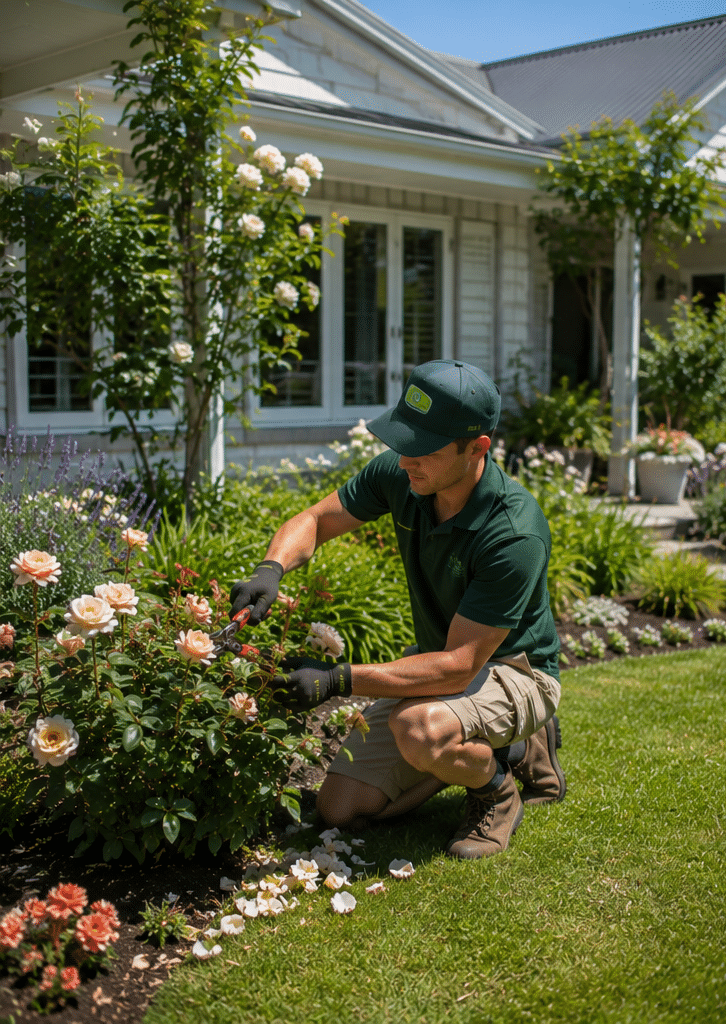
Hedge trimming and pruning are often included in Garden Care Services. They improve appearance, control size, support plant health, and keep paths, driveways, and entrances clear.
However, pruning should not be random. Different plants respond differently. Some shrubs tolerate regular shaping. Others need careful seasonal pruning. Fruit trees, roses, natives, hedges, and ornamental shrubs may each need a different approach.
Poor pruning can cause stress, weak regrowth, disease entry points, or an uneven shape. Therefore, the “why” matters. A gardener may prune to remove dead material, improve airflow, shape a hedge, reduce crowding, encourage flowering, or keep growth away from buildings.
From my experience, homeowners often wait until hedges are too tall or shrubs block windows before calling for help. At that point, the job is harder and may require staged pruning. Regular light trimming is usually better than severe cutting.
Good pruning practice may include:
- Using clean, sharp tools
- Removing dead, damaged, or crossing branches
- Avoiding unnecessary heavy cuts
- Keeping hedge sides slightly tapered where suitable
- Clearing clippings after the job
- Checking for nesting birds or wildlife before major trimming
For taller trees, large branches, or work near power lines, a qualified arborist may be needed. Garden care is suitable for smaller maintenance tasks, but tree safety work should be handled by the right professional.
Soil, Mulch, Compost, and Garden Waste
Healthy gardens start with healthy soil. Soil supports roots, holds water, stores nutrients, and affects how plants grow. Over time, soil can become compacted, depleted, too dry, or poorly drained. Garden Care Services may include basic soil improvement, compost application, mulching, and advice on plant health.
Mulch is especially useful in many New Zealand gardens. It helps reduce weed growth, supports soil moisture, and gives beds a clean finish. Organic mulch can also break down slowly and improve soil structure.
Compost can help improve soil condition. However, not all garden waste should be composted at home. Diseased plant material, invasive weeds, and weeds with seeds can spread problems if compost is not managed properly. Therefore, green waste disposal should be handled carefully.
Garden waste may include grass clippings, hedge trimmings, leaves, small branches, and weeds. Some councils and private services offer green waste options, while some homeowners use composting or mulching on site. The right option depends on volume, plant type, and local availability.
DIY vs Professional Garden Care Services
Some homeowners enjoy looking after their gardens. Others prefer professional help. Both options can work, but they suit different situations.
| Option | Best For | Benefits | Limitations |
| DIY garden care | Small gardens, simple lawns, people with time | Lower direct cost, personal control, satisfying work | Requires tools, time, knowledge, and waste handling |
| Professional Garden Care Services | Busy households, rental properties, large or fast-growing gardens | Consistent results, better equipment, efficient clean-ups | Ongoing cost, provider availability |
| Mixed approach | Homeowners who do light tasks but outsource bigger jobs | Flexible and cost-balanced | Needs clear task planning |
DIY can be suitable for simple tasks like watering, light weeding, or small lawn areas. However, professional Garden Care Services are helpful when a property needs reliable presentation, regular maintenance, or heavier work such as hedge trimming and large clean-ups.
For rental properties, professional care may also reduce disputes about outdoor presentation. For homeowners preparing to sell, it can improve first impressions. For older adults or busy families, it can make outdoor spaces safer and easier to enjoy.
How to Choose a Garden Care Provider
Choosing the right provider is important. A cheap service is not always the best value if the work is rushed, inconsistent, or incomplete. Instead, look for a provider who understands your goals and explains what is included.
Start by checking whether the provider offers the services you need. Some focus on lawn mowing only. Others provide broader Garden Care Services such as pruning, weeding, mulching, and clean-ups.
Ask practical questions such as:
- Do you offer one-off and regular garden care?
- Is green waste removal included or extra?
- Do you bring your own tools and equipment?
- Can you maintain lawns, hedges, and garden beds?
- How often do you recommend visits for this property?
- What happens if weather delays the work?
- Are estimates based on time, property size, or task type?
Also, look for clear communication. A good provider should be realistic. They should not guarantee perfect growth, instant weed removal, or permanent results. Gardens are living spaces, so outcomes depend on weather, soil, plant condition, and ongoing care.
Numbered Checklist: How to Start Garden Care Services
Use this checklist before booking Garden Care Services in New Zealand.
- Walk around your garden first.
Note problem areas such as long grass, weeds, overgrown hedges, blocked paths, poor drainage, or tired garden beds. - Decide your main goal.
Choose whether you need a one-off clean-up, regular maintenance, lawn care, hedge trimming, or full garden care. - Take photos if requesting a quote online.
Photos help the provider understand size, access, waste volume, and task complexity. - Ask what is included.
Confirm mowing, edging, pruning, weeding, waste removal, and any extra charges before work begins. - Discuss access and safety.
Mention locked gates, pets, steep areas, outdoor taps, parking, or fragile plants. - Set a realistic schedule.
Weekly, fortnightly, monthly, or seasonal visits may suit different gardens. - Confirm green waste handling.
Ask whether clippings and branches are removed, composted, mulched, or left on site. - Review the first visit.
After the initial service, check whether the result matches your expectations and adjust the plan. - Keep communication open.
Tell your provider about new planting, outdoor events, rental inspections, or areas that need extra care. - Plan ahead for seasonal work.
Book pruning, mulching, and clean-ups before peak demand periods when possible.
Common Mistakes to Avoid with Garden Care Services
One common mistake is booking only when the garden is badly overgrown. While a professional can help, the first visit may take longer and cost more. Regular care is usually easier.
Another mistake is cutting lawns too short. Short grass can look tidy for a few days, but it may weaken the lawn, especially during dry weather. A slightly higher cut can often support better lawn health.
A third mistake is ignoring weeds until they seed. Once weeds spread, removal becomes more time-consuming. Regular weeding and mulch can reduce future pressure.
Some homeowners also forget about green waste. Hedge trimming and clean-ups can produce more waste than expected. Therefore, it is wise to confirm whether removal is included.
Finally, many people treat all plants the same. This can lead to poor pruning, wrong timing, or plant stress. A better approach is to identify important plants and maintain them according to their growth habits.
People Also Ask About Garden Care Services in New Zealand
How often should I book Garden Care Services?
Most New Zealand gardens benefit from fortnightly or monthly care, while fast-growing lawns may need more frequent mowing in spring and summer. The right schedule depends on rainfall, lawn growth, garden size, and how tidy you want the property to look.
What do Garden Care Services usually include?
They usually include lawn mowing, edging, weeding, hedge trimming, pruning, leaf clearing, garden bed tidying, mulching, and green waste removal. However, inclusions vary, so always confirm the service list before booking.
Are Garden Care Services worth it for a small property?
Yes, they can be worthwhile if you want consistent presentation without buying tools or spending weekends on maintenance. Small gardens can still develop weeds, overgrown edges, and untidy beds if they are not maintained.
Can garden care help with weeds?
Yes, regular garden care can reduce weeds by removing them early, improving mulch cover, and keeping lawns and beds healthier. However, weed control is ongoing because seeds can arrive through wind, birds, soil movement, and neighbouring areas.
Is garden waste removal included?
Sometimes it is included, and sometimes it costs extra. Always ask before booking because hedge clippings, branches, weeds, and lawn waste can add time, transport, and disposal requirements.
Expert Q&A: Garden Care Services
1. What is the difference between garden maintenance and Garden Care Services?
Garden maintenance often refers to routine tidy-up tasks such as mowing, edging, and trimming. Garden Care Services can be broader because they may include plant health, soil improvement, seasonal planning, weed prevention, and long-term garden presentation.
2. How can I tell if my garden needs professional care?
You may need professional care if the lawn grows faster than you can manage, hedges are uneven, weeds keep returning, paths are blocked, or garden waste is difficult to handle. You may also benefit from help if you are preparing for a rental inspection, sale, event, or seasonal clean-up.
3. What should I do before a gardener arrives?
Clear personal items, unlock access points, secure pets, and explain any plants or areas that need special care. It also helps to mention hidden hazards such as irrigation lines, uneven ground, loose pavers, or delicate garden features.
4. Can Garden Care Services improve kerb appeal?
Yes, regular mowing, clean edges, trimmed hedges, weed-free beds, and fresh mulch can improve kerb appeal quickly. However, lasting kerb appeal depends on consistent maintenance rather than a single clean-up.
5. Do Garden Care Services include planting new plants?
Some providers offer planting support, while others focus only on maintenance. If you want planting, ask whether the provider can help with plant selection, soil preparation, spacing, watering needs, and aftercare.
Conclusion
Garden Care Services give New Zealand homeowners a practical way to keep outdoor spaces tidy, healthy, and enjoyable throughout the year. They can include lawn mowing, edging, weeding, pruning, hedge trimming, mulching, green waste removal, seasonal clean-ups, and plant health checks.
The best results come from regular care, clear communication, and a plan that fits local conditions. Because New Zealand gardens are shaped by changing weather, regional weeds, soil differences, and plant growth cycles, a tailored approach is better than a one-size-fits-all service.
Whether you need a one-off clean-up or ongoing maintenance, professional support can save time, reduce stress, and help your garden stay under control. For reliable outdoor care tailored to New Zealand homes, explore Yunisa’s practical garden and outdoor maintenance services and take the next step towards a cleaner, healthier garden.