
Lawn Mowing Services are one of the most searched property-care needs in New Zealand because a lawn can change quickly with rain, warmth, shade, weeds, and everyday foot traffic. From my experience working with local-service content and customer search behaviour, most homeowners are not only looking for someone to “cut the grass”. They want a reliable service that keeps the outdoor area tidy, protects the lawn’s health, and fits around busy family, rental, or business schedules.
definition:
Lawn Mowing Services are professional outdoor maintenance services that cut grass to a suitable height, trim edges, manage clippings, and keep lawns neat through regular or one-off visits. In New Zealand, good mowing also considers local weather, grass growth, site access, safety, and green-waste handling.
Table of Contents
- What Lawn Mowing Services Usually Include
- Why Lawn Mowing Services Matter in New Zealand
- How New Zealand Conditions Affect Lawn Mowing
- DIY vs Professional Lawn Mowing Services
- How Often Should You Book Lawn Mowing Services?
- What Makes a Good Lawn Mowing Service Provider?
- Lawn Mowing Cost Factors in New Zealand
- Numbered Checklist: How to Prepare for a Lawn Mowing Visit
- Seasonal Lawn Mowing Services Guide
- Safety, Biosecurity, and Green-Waste Considerations
- People Also Ask
- Expert Q&A
- Conclusion
What Lawn Mowing Services Usually Include
Professional Lawn Mowing Services usually cover more than a quick run over the grass. A complete service may include mowing, line trimming, edging, blowing paths clear, checking lawn condition, and removing or mulching clippings. However, the exact inclusions depend on the provider, the lawn size, the terrain, and whether the visit is part of a regular maintenance plan.
In New Zealand, many homes have mixed outdoor layouts. For example, one property may have a small front lawn, a sloped back section, a berm, narrow side access, and garden edging around fences. Because of that, a good mowing service should first understand the property rather than apply the same process everywhere.
From my experience, the best results usually come from matching the mowing approach to the lawn’s current condition. If grass is short and healthy, a light maintenance cut may be enough. However, if the lawn is long, damp, uneven, or full of weeds, it may need a slower cut, staged height reduction, extra trimming, or green-waste removal.
Typical Lawn Mowing Services may include:
- Grass cutting with a push mower or ride-on mower, depending on lawn size.
- Edge trimming along paths, driveways, fences, garden beds, and retaining walls.
- Line trimming around trees, posts, steps, and tight spaces.
- Clipping management through catcher collection, mulching, or disposal.
- Path and driveway clean-up after the mow.
- Basic lawn observations, such as noticing bare patches, weeds, moss, or drainage issues.
- Optional extras like hedge trimming, garden tidy-ups, weed spraying, and seasonal clean-ups.
A reliable provider should explain what is included before the job starts. This matters because “mowing” can mean different things to different people. For one customer, mowing may only mean cutting the main grass area. For another, it may mean a complete tidy-up with edges, clippings removed, and outdoor surfaces cleared.
Why Lawn Mowing Services Matter in New Zealand
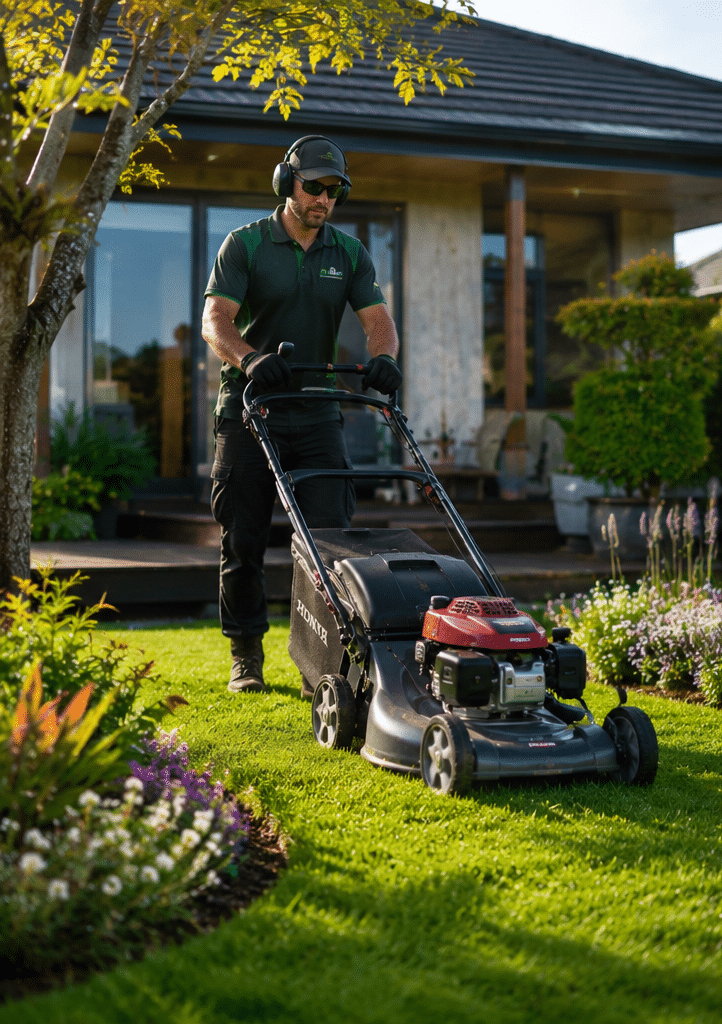
Lawn Mowing Services matter because lawns are living surfaces, not just outdoor flooring. Regular mowing supports a neater look, but it can also help the lawn stay stronger when done correctly. When grass is cut too short, it may become stressed, expose soil, and allow weeds or moss to settle in. On the other hand, when grass is left too long, it can look messy, hold moisture, attract pests, and become harder to restore.
New Zealand’s climate also makes regular lawn care important. NIWA provides climate data and summaries for rainfall, temperature, sunshine, frost, and related conditions across New Zealand, which is useful because lawn growth changes across regions and seasons. For example, Auckland, Hamilton, Tauranga, Wellington, Christchurch, Dunedin, and Queenstown can all have different mowing patterns because their rainfall, soil moisture, temperature, and frost conditions vary. According to NIWA climate data, New Zealand climate information is tracked across multiple weather and climate measures, including temperature and rainfall.
As a result, lawn mowing is not just about choosing a day on the calendar. A wet week can speed up growth and delay mowing because soggy lawns can rut or tear. Meanwhile, a dry summer spell may slow growth and make a higher mower setting more suitable. Therefore, the right schedule should be flexible enough to respond to conditions.
For homeowners, regular Lawn Mowing Services can save time and reduce the need to buy, store, fuel, charge, sharpen, and maintain equipment. For landlords and property managers, mowing also helps keep rental properties presentable between inspections or tenancies. For small businesses, tidy lawns and edges can support a cleaner first impression for customers, staff, and visitors.
How New Zealand Conditions Affect Lawn Mowing Services
New Zealand lawns can be affected by several local conditions. These include rainfall, coastal air, clay soils, shade, frost, wind exposure, and fast spring growth. Because of this, Lawn Mowing Services should be planned with the property’s microclimate in mind.
In Auckland and Northland, lawns may grow strongly through warm and wet periods. Therefore, weekly or fortnightly mowing may be needed during peak growth. In Wellington, wind exposure and slopes can affect how mowing is carried out. In Canterbury, dry summers and colder winters may change the ideal mowing height. In Otago and Southland, frosts can slow grass growth, so mowing may become less frequent during colder months.
Soil also plays a role. Clay-heavy ground can stay wet after rain, which makes mowing harder and increases the risk of wheel marks. Sandy or free-draining soil may dry out faster, especially in exposed areas. Shaded lawns near fences, hedges, or large trees may grow unevenly and develop moss if they stay damp.
From my experience, the most common mistake is mowing based only on habit. For example, mowing every Saturday may work in spring, but it may not suit a dry January lawn or a wet winter section. Instead, it is better to look at grass height, ground moisture, and the lawn’s response after each cut.
Lawn Mowing Services and the One-Third Rule
A useful practical rule is to avoid removing more than about one-third of the grass blade in one mow. This is often called the one-third rule. It matters because grass uses its leaves to produce energy. If too much leaf is removed at once, the lawn can become stressed and may look yellow, patchy, or thin.
For example, if a lawn has grown very long after rain or a holiday period, it may be better to cut it gradually over two visits rather than scalp it in one session. This is especially true for lawns that are already dry, shaded, newly laid, or full of weeds.
A professional Lawn Mowing Services provider should know when to slow down, raise the cutting height, or recommend a staged tidy-up. Although a very short cut may look neat for a few days, it can create longer-term problems if the lawn is weakened.
DIY vs Professional Lawn Mowing Services
Some New Zealand homeowners enjoy mowing their own lawns. Others prefer to outsource it because they lack time, equipment, storage space, or physical ability. Both options can work, but they suit different needs.
| Option | Best For | Main Benefits | Possible Drawbacks |
| DIY lawn mowing | Small, flat lawns and people who enjoy outdoor work | Lower direct cost, flexible timing, personal control | Requires equipment, storage, maintenance, fuel or battery charging, and time |
| One-off Lawn Mowing Services | Overgrown lawns, rental clean-ups, pre-sale tidy-ups, post-holiday catch-ups | Fast improvement without ongoing commitment | May cost more per visit than a regular plan |
| Regular Lawn Mowing Services | Busy households, landlords, businesses, and larger sections | Consistent appearance, planned visits, less stress, better routine care | Requires scheduling and ongoing budget |
| Full garden maintenance | Properties needing mowing plus hedges, weeds, edges, and tidy-ups | More complete outdoor care | Higher cost than mowing-only service |
The best choice depends on the value of your time, the lawn size, your equipment, and the standard you want. For instance, DIY may be fine for a small town lawn. However, professional Lawn Mowing Services can be more practical for steep sections, large lawns, rental properties, or households where weekends are already full.
How Often Should You Book Lawn Mowing Services?
The ideal mowing frequency depends on growth rate, season, grass type, rainfall, sun exposure, and the finish you want. However, most New Zealand lawns need more frequent mowing in spring and early summer, then less frequent mowing during cold or dry periods.
As a general estimate:
| Season in New Zealand | Likely Lawn Growth | Suggested Mowing Frequency | Practical Note |
| Spring | Fast growth | Every 1 to 2 weeks | Growth can surge after rain and warmer days |
| Summer | Moderate to fast, unless dry | Every 1 to 3 weeks | Raise cutting height during hot or dry periods |
| Autumn | Moderate growth | Every 2 to 4 weeks | Good time to keep leaves and clippings managed |
| Winter | Slow growth | As needed | Avoid mowing frosty, soggy, or dormant lawns |
These are estimates, not fixed rules. A lawn in Auckland may need more frequent mowing during warm wet periods, while a dry Canterbury lawn may need less frequent mowing in summer. Also, lawns near irrigation, shade, or fertile soil may grow faster than exposed lawns.
From my experience, regular customers often choose a fortnightly schedule during active growth, then reduce visits during winter. However, properties with presentation needs, such as commercial sites or homes for sale, may need a tighter schedule.
What Makes a Good Lawn Mowing Services Provider?
A good Lawn Mowing Services provider should offer more than a low price. The provider should be reliable, clear, practical, and careful around your property. Since mowing involves machinery, access, vehicles, noise, people, pets, and sometimes public-facing areas, professionalism matters.
Look for these signs:
- Clear communication about timing, scope, and pricing.
- The ability to inspect or ask for photos before quoting.
- Practical questions about access, slopes, pets, locked gates, and green waste.
- Proper equipment for the size and shape of the lawn.
- Respect for garden beds, trees, irrigation, edging, and outdoor furniture.
- A plan for wet weather and rescheduling.
- Safe work habits around machinery, stones, glass, children, pets, and vehicles.
- Clean finishes around paths, driveways, fences, and entrances.
WorkSafe New Zealand’s safe use of machinery guidance explains that machinery can create serious hazards and that risks should be managed through suitable controls. For homeowners, this reinforces why professional mowing should involve safe equipment use, not just speed.
A strong provider should also be honest about what mowing can and cannot fix. For example, mowing will not solve deep compaction, poor drainage, severe moss, soil imbalance, or dead patches by itself. However, regular mowing can support a better-looking lawn while you address those issues separately.
Lawn Mowing Services Cost Factors in New Zealand
Lawn mowing prices in New Zealand vary because every property is different. Therefore, any price estimate should be treated as a guide only. A small, flat lawn with easy access will usually cost less than a large, sloped, overgrown, or difficult site.
Common cost factors include:
- Lawn size and total mowing area.
- Grass length and density.
- Whether the lawn is flat, sloped, uneven, or terraced.
- Access for equipment, including gates, steps, and narrow paths.
- Amount of edging and line trimming required.
- Whether clippings are mulched, left, collected, or removed.
- Travel time and service area.
- One-off versus recurring schedule.
- Extra services such as weeding, hedge trimming, pruning, or garden clean-ups.
- Parking, site restrictions, or timing needs for commercial properties.
A one-off overgrown lawn often costs more than a regular maintenance mow because it takes longer, creates more clippings, and may require extra passes. In contrast, recurring Lawn Mowing Services usually become more efficient because the grass stays within a manageable height.
For the fairest quote, provide clear photos, an approximate lawn size, suburb, access details, and whether green-waste removal is needed. This helps the provider avoid underquoting or adding surprise charges later.
How to Prepare for a Lawn Mowing Services Visit
Use this checklist before your first booking or whenever your lawn has become harder to access.
- Clear the lawn area.
Move toys, hoses, sports gear, outdoor furniture, plant pots, and pet bowls. This helps the mower move safely and prevents damage. - Check for hidden hazards.
Look for stones, glass, wire, irrigation heads, low garden lights, tent pegs, and tree roots. These can damage equipment or become dangerous projectiles. - Unlock gates and confirm access.
If the provider needs to enter the backyard, make sure gates are unlocked or access instructions are clear. - Secure pets.
Keep dogs and other pets indoors or in a safe area. Even friendly pets can become stressed by mower noise. - Mention slopes or wet areas.
Tell the provider about soft ground, drainage problems, steep banks, or areas that stay damp. - Confirm clipping preferences.
Decide whether you want clippings caught, mulched, left on the lawn, composted, or removed. - Point out delicate areas.
Identify new plants, garden edging, irrigation, vegetable beds, or areas you do not want trimmed. - Agree on the mowing height.
Ask for a practical height rather than the shortest possible cut. This helps reduce stress on the lawn. - Confirm the service scope.
Check whether edging, blowing paths, green-waste removal, and trimming are included. - Set a recurring schedule if needed.
If the lawn grows quickly, consider a regular booking so the property stays manageable.
Seasonal Guide to Lawn Mowing Services in New Zealand
Seasonal mowing is important because lawns grow differently throughout the year. Therefore, your schedule should shift rather than stay fixed.
Spring Lawn Mowing Services
Spring is often the busiest period for Lawn Mowing Services in New Zealand. Rain, warmer soil, and longer daylight can push grass into fast growth. During this time, regular mowing helps maintain shape and prevents the lawn from becoming too long between visits.
However, avoid cutting too low at the start of spring. A moderate cut encourages a healthier lawn and reduces stress after winter. If the lawn has weeds, moss, or bare patches, spring is also a good time to plan broader lawn care.
Summer Lawn Mowing Services
Summer mowing depends heavily on rainfall and heat. If the weather is warm and damp, lawns may still grow quickly. However, if the lawn becomes dry, it is usually better to mow higher and less often.
A higher cut can help shade the soil and protect the roots. Also, mowing during the cooler part of the day can reduce stress on the lawn. If the grass is brown or dormant, mowing may not be needed until growth returns.
Autumn Lawn Mowing Services
Autumn is a useful reset season. The weather is often milder, and lawns may recover from summer stress. Regular mowing can keep the lawn neat while fallen leaves, clippings, and weeds are managed.
This is also a good time to look for compaction, uneven growth, and bare areas. Although mowing alone will not fix these issues, it helps keep the surface tidy while other maintenance is planned.
Winter Lawn Mowing Services
Winter mowing is usually less frequent because growth slows. However, lawns may still need occasional cutting in warmer or wetter regions. The key is to avoid mowing when the grass is frosty, waterlogged, or very soft underfoot.
If a lawn is too wet, mowing can leave ruts and tear the grass. Therefore, a responsible provider may delay the visit rather than damage the lawn. This is a sign of good judgement, not poor service.
Safety, Biosecurity, and Green-Waste Considerations
Professional Lawn Mowing Services involve practical safety and site-care responsibilities. Mowers, trimmers, blades, flying debris, slopes, vehicles, and public footpaths can all create risk. That is why preparation, equipment condition, and careful work habits matter.
For residential customers, safety starts with clearing objects and keeping children and pets away during the job. For commercial or shared properties, it may also include timing the work away from busy pedestrian periods, using visible work practices, and keeping paths clear.
Biosecurity is another New Zealand-specific consideration. MPI explains that biosecurity helps stop harmful pests and diseases from entering or spreading in New Zealand. In mowing terms, this supports practical habits such as cleaning equipment when moving between sites with weeds, soil, seeds, or plant debris. MPI’s New Zealand biosecurity guidance explains the broader purpose of preventing harmful pests and diseases from causing damage.
Green waste should also be handled responsibly. Grass clippings can sometimes be mulched back into the lawn when the cut is light and the grass is dry. However, heavy clippings may need collection because thick piles can smother the lawn. If the property has no compost area, ask whether the provider removes green waste or leaves it in an agreed place.
Admin-related tasks, such as checking service terms, confirming insurance, documenting access instructions, or recording health and safety notes, should be treated as practical service administration. They are not legal advice. If a property has complex body corporate, commercial, council, or tenancy requirements, the relevant owner, property manager, or licensed adviser should review those obligations.
Lawn Mowing Services for Homes, Rentals, and Businesses
Different customers need different outcomes. A homeowner may care most about comfort, appearance, and weekend time. A landlord may care about property standards and inspection readiness. A business may care about first impressions, safety, and predictable scheduling.
For homes, regular Lawn Mowing Services can keep outdoor areas ready for children, pets, guests, and summer entertaining. For rental properties, mowing can help avoid disputes about garden condition when responsibilities are clearly agreed. For businesses, tidy lawns and edges can support a professional frontage, especially for offices, childcare centres, clinics, retail sites, and small commercial buildings.
However, the service scope should be written clearly. For example, “front and back lawn mowing with edging and path blow-down every two weeks” is much clearer than “garden tidy”. Clear wording helps both the customer and provider understand expectations.
How to Choose Between One-Off and Regular Lawn Mowing Services
A one-off service is useful when the lawn has become overgrown, when you are preparing for guests, or when a property needs a quick tidy before photos, sale, lease, or inspection. It is also helpful after travel, illness, or a busy work period.
Regular Lawn Mowing Services are better when you want ongoing consistency. They also prevent the lawn from reaching an overgrown state, which can reduce stress on the grass and make each visit faster. For many New Zealand households, a recurring schedule during spring and summer is the most practical option.
A blended approach can also work. For example, you might book regular mowing from September to April, then switch to occasional mowing during winter. This keeps the lawn under control without paying for unnecessary visits.
Common Lawn Mowing Mistakes to Avoid
Many lawn problems start with simple mowing mistakes. Fortunately, most are easy to avoid.
First, avoid mowing too low. A short cut may look tidy at first, but it can weaken the lawn and expose soil. Next, avoid mowing wet grass if the ground is soft. Wet mowing can cause clumps, wheel marks, and uneven cutting.
Also, do not ignore mower blade sharpness. Dull blades tear grass rather than cut it cleanly, which can leave a rough or pale finish. In addition, avoid leaving heavy clumps of clippings on the lawn. Light mulch can be helpful, but thick piles block sunlight and airflow.
Finally, do not treat every lawn the same. A sunny, flat lawn may tolerate a different cut from a shaded, damp, moss-prone lawn. A good provider adjusts the method to the lawn, not the other way around.
People Also Ask About Lawn Mowing Services in New Zealand
How often should I use Lawn Mowing Services in New Zealand?
Most lawns need mowing every 1 to 2 weeks during fast spring growth, then less often during dry summer periods or winter. However, the best schedule depends on rainfall, grass height, lawn condition, and the finish you want.
Are Lawn Mowing Services worth it for small lawns?
Yes, they can be worth it if you value time, do not own equipment, or want consistent edges and clean-up. Even small lawns need trimming, clipping control, and safe mowing around paths, fences, and garden beds.
Should lawn clippings be removed or mulched?
Light, dry clippings can often be mulched because they break down and return organic matter to the lawn. However, heavy or wet clippings should usually be collected or spread thinly because they can smother grass.
Can Lawn Mowing Services cut an overgrown lawn in one visit?
Often, yes, but very long lawns may need staged cutting. Cutting too much at once can stress the grass, create heavy waste, and leave an uneven finish, so a provider may recommend two visits.
Do Lawn Mowing Services include weeding?
Not always. Basic mowing usually covers cutting, edging, trimming, and clean-up, while weed control may be an extra service. Always confirm the scope before booking.
Expert Q&A: Lawn Mowing Services
1. What mowing height is best for New Zealand lawns?
There is no single perfect height because lawns vary by grass type, season, and condition. However, a moderate height is usually safer than a very short cut, especially during dry weather or when the lawn is shaded. From my experience, the healthiest-looking lawns are usually cut to look tidy without exposing the soil.
2. Why does my lawn look yellow after mowing?
A lawn may look yellow after mowing if it was cut too short, cut with dull blades, or left too long before the cut. When the mower removes too much green leaf, the lower pale stems become visible. Therefore, gradual height reduction is better for long grass.
3. Should I mow before or after rain?
It is usually better to mow when the grass is dry and the ground is firm. Mowing before heavy rain may be useful if the lawn is already due, but mowing immediately after rain can lead to clumping, ruts, and uneven cutting. If the soil is soft underfoot, waiting is often the better choice.
4. What should I ask before hiring Lawn Mowing Services?
Ask what is included, whether edging is part of the price, how clippings are handled, whether green-waste removal costs extra, and how wet-weather rescheduling works. Also ask about access requirements, recurring booking options, and whether the provider has suitable equipment for your lawn size and slope.
5. Can regular mowing improve lawn health?
Regular mowing can support healthier growth when it is done at the right height and frequency. It helps keep grass even and prevents the shock that comes from cutting very long grass too hard. However, mowing is only one part of lawn health, along with soil, drainage, sunlight, nutrients, and weed control.
Conclusion: Choosing Lawn Mowing Services That Fit Your Property
Lawn Mowing Services are a practical way to keep New Zealand homes, rentals, and business properties tidy throughout the year. However, the best results come from more than regular cutting. They come from choosing the right mowing height, adjusting to the season, managing clippings properly, preparing the site, and working with a provider who understands local conditions.
A good lawn service should be clear, reliable, safety-aware, and flexible enough to suit your property. Whether you need a one-off tidy-up or ongoing maintenance, the right approach can save time and help your outdoor space look cared for.
For dependable outdoor help tailored to local needs, explore professional property care support from Yunisa and take the next step towards a cleaner, easier-to-manage lawn.