
Residential Lawn Mowing is one of the most regular home maintenance jobs for New Zealand homeowners, renters, landlords, and property managers. From my experience reviewing home service needs, most people do not just want “short grass”. They want a tidy section, safer outdoor areas, better street appeal, and a lawn that stays manageable through wet springs, dry summers, and fast regrowth.
What Is Residential Lawn Mowing?
Residential Lawn Mowing is the regular cutting and tidy maintenance of grass around a private home, including front lawns, back lawns, edges, paths, and sometimes the street berm. In New Zealand, good mowing also considers season, rainfall, grass stress, safety, greenwaste, and local council expectations.
Table of Contents
- Why Residential Lawn Mowing Matters in New Zealand
- What a Good Residential Lawn Mowing Service Includes
- How Often Should You Mow a Residential Lawn?
- DIY vs Professional Residential Lawn Mowing
- New Zealand Berms, Greenwaste, and Neighbour Considerations
- The Residential Lawn Mowing Process: Step-by-Step Checklist
- Lawn Health Basics for Kiwi Homes
- Safety Tips Before Mowing
- Cost Factors for Residential Lawn Mowing in New Zealand
- How to Choose a Reliable Lawn Mowing Provider
- People Also Ask
- Expert Q&A
- Conclusion
Why Residential Lawn Mowing Matters in New Zealand
A well-kept lawn changes how a property feels. It makes a home look cared for, improves outdoor use, and helps keep grass from becoming too thick, wet, and hard to manage. In many New Zealand suburbs, lawns also sit close to footpaths, berms, shared driveways, fences, and neighbouring properties. Because of that, Residential Lawn Mowing is both a home care task and a practical part of keeping the property presentable.
However, New Zealand lawns can be unpredictable. A small Auckland lawn may grow quickly after rain. A Christchurch lawn may slow down during dry spells. A Wellington section may be affected by shade, wind, slope, and drainage. Meanwhile, homes in Hamilton, Tauranga, Dunedin, or rural townships may have larger lawns that need a different mowing plan.
From my experience, the biggest mistake homeowners make is mowing only when the lawn “looks bad”. By then, the grass may be too long, the mower may struggle, and the cut may leave clumps. As a result, the lawn can look patchy even after mowing. A better approach is to plan Residential Lawn Mowing around growth, not just appearance.
Good mowing is not about cutting as low as possible. In fact, scalping a lawn can stress the grass, expose soil, and make it easier for weeds to take hold. Instead, a steady mowing routine keeps the lawn at a usable height while protecting the leaf area grass needs to recover.
What a Good Residential Lawn Mowing Service Includes
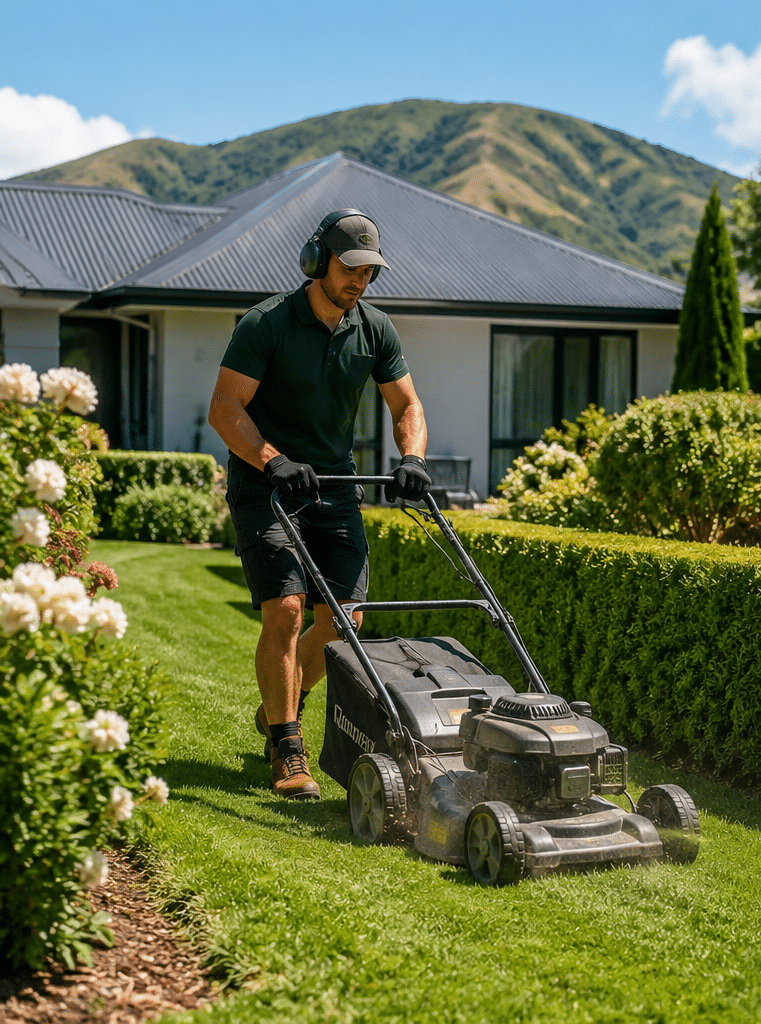
A proper Residential Lawn Mowing service usually includes more than pushing a mower over the grass. The exact scope depends on the provider, lawn size, access, and booking type. Still, most quality residential lawn care visits follow a clear process.
Core Residential Lawn Mowing Tasks
A typical visit may include:
- Mowing front and back lawns
- Trimming edges along paths, fences, driveways, and garden beds
- Cutting grass around trees, clotheslines, letterboxes, and outdoor fixtures
- Clearing loose clippings from hard surfaces
- Checking for hazards such as stones, toys, branches, or hidden objects
- Managing clippings by mulching, catching, or removing greenwaste if agreed
- Noting any problem areas such as weeds, bare patches, moss, or drainage issues
Therefore, when comparing services, look beyond price. A cheaper mow may not include edging, tidy-up, greenwaste handling, or berm mowing. On the other hand, a more complete service may save time because the whole outdoor area looks finished.
Why Edging Matters
Edging is often what separates a basic cut from a tidy finish. It creates clean lines along paths, concrete, garden borders, and driveways. In smaller New Zealand sections, edging is especially noticeable because outdoor areas are close to the house and street.
For example, a lawn can be freshly mown but still look untidy if grass hangs over the footpath. Likewise, a clean edge can make an ordinary lawn look sharper. That is why many homeowners include edging as part of regular Residential Lawn Mowing rather than treating it as an occasional extra.
Catching vs Mulching Grass Clippings
Grass clippings can be handled in different ways. Catching removes clippings from the lawn and creates a clean finish. Mulching cuts clippings finely and returns them to the lawn. Leaving long clumps behind is usually the least desirable option because it can smother grass and look messy.
Mulching can work well when the lawn is dry and not too long. However, catching may be better when grass is wet, overgrown, or full of seed heads. In my experience, many residential lawns need a mix of both methods across the year.
How Often Should You Mow a Residential Lawn?
Residential Lawn Mowing frequency depends on season, weather, lawn type, soil, shade, and how tidy you want the property to look. There is no single schedule that suits every New Zealand home.
As a practical estimate, many Kiwi lawns need mowing every 1 to 2 weeks during strong growth periods. During cooler or drier periods, mowing may move to every 3 to 6 weeks. However, this is only a guide. A shaded lawn in Wellington may behave differently from a sunny lawn in Hamilton or a coastal lawn in Tauranga.
Seasonal Mowing Guide for New Zealand Homes
| Season | Typical Lawn Behaviour | Practical Residential Lawn Mowing Approach |
| Spring | Fast growth after rain and warmer days | Mow more often, avoid cutting too much at once, watch for weeds |
| Summer | Growth varies by rainfall and heat | Raise mowing height during dry stress, mow when needed, avoid scalping |
| Autumn | Steady growth in many areas | Keep a regular rhythm before winter, clear leaves and clumps |
| Winter | Slower growth, wet soil, less daylight | Mow less often, avoid mowing very wet lawns, keep paths safe |
The key is to avoid removing too much grass in one cut. A common lawn care rule is to remove only around one third of the grass blade at a time. This reduces stress and helps the lawn recover. If the grass is very long, it is better to reduce it gradually over two visits rather than cutting it very short in one pass.
Why Wet Lawns Need Care
New Zealand weather can make Residential Lawn Mowing tricky. Wet grass is heavier, more slippery, and more likely to clump. It can also clog mower decks and leave wheel marks in soft soil.
However, waiting too long can also cause problems. If rain continues for days, the grass may become too long and harder to restore. Therefore, a flexible mowing plan is useful. A good provider will choose the safest and cleanest mowing window, rather than forcing a poor cut in unsuitable conditions.
DIY vs Professional Residential Lawn Mowing
Many homeowners start with DIY mowing, then move to a professional service when time, equipment, slope, access, or lawn size becomes a problem. Both options can work. The right choice depends on your property and routine.
| Factor | DIY Residential Lawn Mowing | Professional Residential Lawn Mowing |
| Time | Takes personal time on weekends or after work | Saves time and keeps a planned schedule |
| Equipment | You buy, store, fuel, charge, and maintain tools | Provider brings suitable mowing and trimming equipment |
| Finish | Depends on skill, mower quality, and effort | Usually more consistent, especially with edging |
| Safety | You manage hazards, slopes, debris, and machine risks | Experienced operators should follow safety processes |
| Greenwaste | You handle clippings and disposal | May be included or added, depending on service |
| Best for | Small, flat lawns and people who enjoy mowing | Busy households, rentals, larger lawns, elderly homeowners, and uneven sections |
DIY may be enough for a small flat section. However, professional Residential Lawn Mowing can be worth it when the lawn affects kerb appeal, rental presentation, family time, or safety. For landlords and property managers, a regular service can also help avoid last-minute clean-ups before inspections or tenant changes.
New Zealand Berms, Greenwaste, and Neighbour Considerations
New Zealand homeowners often ask whether the berm is part of their Residential Lawn Mowing responsibility. A berm is the grass strip between a property boundary and the road. It may sit beside a footpath, driveway, or street edge.
In Auckland, Auckland Transport’s berm maintenance guidance says the property owner is responsible for mowing the berm outside their property as part of general land maintenance. It also notes that if berm maintenance poses a safety risk, such as a steep gradient, the property owner can apply for Auckland Council maintenance under strict criteria.
However, council practices vary across New Zealand. Therefore, treat berm rules as an administrative check, not legal advice. If the berm is steep, unsafe, planted, damaged, or unclear, check your local council’s website or contact the council before making assumptions.
Greenwaste and Biosecurity
Residential Lawn Mowing also creates clippings, weeds, and garden waste. These materials can spread weeds if handled poorly. MPI’s gardening and pest reporting advice says weeds and pests can damage New Zealand’s economy, environment, and way of life, and gardeners play a role in protecting the country from biosecurity threats.
This matters for home lawns because mowing can move seeds, fragments, and pests around a property. For example, if invasive weeds are cut and dumped in the wrong place, they may spread. As a result, homeowners should use council-approved greenwaste options and avoid dumping garden waste in reserves, streams, parks, or empty lots.
Noise and Good Neighbour Habits
Mowers, line trimmers, and blowers can be noisy. While daytime household mowing is normal, it is still better to be considerate. Avoid very early mornings, late evenings, and times when neighbours are likely to be resting.
For regular Residential Lawn Mowing, a predictable schedule can help. If you live close to neighbours, a polite routine is better than mowing at random times. This is especially useful in townhouses, cross-lease properties, shared driveways, and compact urban sections.
The Residential Lawn Mowing Process: Step-by-Step Checklist
A good mowing process keeps the lawn tidy and reduces avoidable problems. Whether you mow yourself or hire a provider, use this checklist.
- Inspect the lawn first
Walk the area before mowing. Look for stones, toys, branches, hoses, pet waste, uneven ground, hidden holes, and loose objects. - Check the grass condition
Notice whether the grass is wet, long, stressed, patchy, or full of seed heads. This helps decide mowing height and whether to catch or mulch clippings. - Set the right cutting height
Avoid cutting too low. A slightly higher cut is often better during hot, dry, or stressful conditions. - Start with open lawn areas
Mow larger sections first using steady, overlapping passes. Change mowing direction sometimes to reduce tracks and uneven wear. - Trim edges and tight spaces
Use a line trimmer around fences, paths, garden beds, trees, letterboxes, and other tight areas. Take extra care near windows, vehicles, and pets. - Manage clippings properly
Mulch only when clippings are fine enough to settle into the lawn. Otherwise, catch or remove them if that is part of the service. - Blow or sweep hard surfaces
Clear clippings from paths, driveways, patios, decks, and drains. This improves safety and gives the job a finished look. - Check the result from the street
View the lawn from the road or driveway. This helps spot missed edges, clumps, or uneven patches. - Record any follow-up needs
Note weeds, bare areas, moss, drainage issues, pests, or places where the mower scalped uneven ground. - Plan the next mow
Book or schedule the next Residential Lawn Mowing visit based on growth, not just a fixed date.
This process may sound simple, but it prevents many common mistakes. In my experience, the best results come from consistent mowing, sharp equipment, and small adjustments each season.
Lawn Health Basics for Kiwi Homes
Residential Lawn Mowing supports lawn health, but mowing alone cannot fix every lawn problem. A lawn is a living surface. It responds to light, soil, moisture, compaction, drainage, and foot traffic.
Do Not Mow Too Short
Cutting too short can make a lawn look neat for a few days, but it often creates longer-term stress. Short grass has less leaf area, which means it has less ability to recover. It also exposes soil to sun and gives weeds more room.
Instead, aim for a neat but not shaved finish. During summer or dry weather, raise the mower height. During strong growth, mow more often rather than cutting lower.
Keep Mower Blades Sharp
Sharp blades cut grass cleanly. Blunt blades tear it. Torn grass can look pale or ragged after mowing, especially when viewed from a distance. It may also dry at the tips.
For DIY homeowners, blade sharpening is easy to forget. However, it makes a clear difference. If the lawn looks frayed after mowing, the blade may need sharpening or replacing.
Watch for Compaction
Compaction happens when soil becomes pressed down. It is common in lawns used by children, pets, vehicles, and frequent foot traffic. Compacted soil can reduce air and water movement, which makes grass weaker.
Mowing cannot solve compaction by itself. However, a mowing provider may notice signs such as thin grass, puddling, or hard soil. If the issue continues, aeration or soil improvement may be needed.
Adjust for Shade
Shaded lawns often grow thinner and hold moisture longer. Therefore, they may need higher mowing and less aggressive cutting. If a shaded area never improves, it may be better suited to groundcover, garden beds, pavers, mulch, or native planting.
This is where practical advice matters. Not every patch needs to remain lawn. Sometimes the best lawn care decision is to reduce the lawn area and make the section easier to maintain.
Safety Tips Before Mowing
Residential Lawn Mowing involves fast-moving blades, thrown debris, noise, vibration, and uneven ground. Safety should never be treated as an afterthought.
ACC’s lawn mower injury prevention advice reported 6,922 lawn mowing-related injury claims in 2022, with ACC noting that injuries increased through spring as grass growth picked up. ACC also recommends checking gear, keeping people away from the mowing area, clearing debris, knowing how to use the mower, and avoiding strain on your back.
Before mowing, wear sturdy footwear, eye protection, and hearing protection. Also, keep children, pets, and visitors away from the work area. Stones, sticks, wire, and toys can become dangerous when hit by a mower or trimmer.
If the lawn is steep, slippery, or uneven, take extra care. In some cases, it may be safer to use a professional Residential Lawn Mowing service with the right equipment. This is especially true for steep berms, banks, and sections with difficult access.
Cost Factors for Residential Lawn Mowing in New Zealand
Residential Lawn Mowing costs vary. Any price should be treated as an estimate until the provider checks the property. The final cost usually depends on the work required, not just the size of the lawn.
Common Pricing Factors
A provider may consider:
- Lawn size
- Grass length
- Slope and access
- Front lawn, back lawn, or both
- Berm mowing
- Edging requirements
- Obstacles such as trees, trampolines, furniture, and garden beds
- Clipping removal or greenwaste disposal
- Frequency of service
- Travel distance
- One-off clean-up vs regular maintenance
A regular lawn is usually easier and faster to maintain than an overgrown lawn. Therefore, one-off mowing may cost more than a routine service because it can require extra cutting, more clippings, and more time.
Why the Cheapest Quote May Not Be Best
A low quote may be suitable for a quick basic mow. However, it may not include edges, tidy-up, greenwaste, difficult access, or a quality finish. As a result, homeowners should ask what is included.
A fair Residential Lawn Mowing quote should be clear. It should explain the mowing area, edging, clippings, frequency, and any extras. This helps avoid confusion and makes it easier to compare providers.
How to Choose a Reliable Lawn Mowing Provider
Choosing a provider is not only about price. You are trusting someone to access your property, use machinery safely, and leave outdoor areas tidy.
What to Look For
Look for a provider who:
- Gives clear pricing and scope
- Confirms whether berm mowing is included
- Explains how clippings and greenwaste are handled
- Uses suitable equipment for your lawn
- Communicates schedule changes during bad weather
- Takes care around fences, plants, windows, pets, and vehicles
- Offers regular mowing options
- Can identify basic lawn issues and advise when extra care is needed
From practical service experience, communication is one of the strongest signs of reliability. A good provider tells you what is included, what is not included, and when the lawn should next be mown. That clarity saves frustration.
Questions to Ask Before Booking
Before booking Residential Lawn Mowing, ask:
- Is edging included?
- Do you mow the berm?
- What happens if it rains?
- Do you catch, mulch, or remove clippings?
- Is greenwaste disposal included or extra?
- Can I book a regular schedule?
- Do you service my suburb or area?
- What access do you need?
- Are pets required to be inside?
- Do you handle overgrown lawns?
These questions help match the service to your property. They also make the first visit smoother.
People Also Ask: Residential Lawn Mowing in New Zealand
1. How often should Residential Lawn Mowing be done in New Zealand?
Most lawns need mowing more often in spring and early summer, then less often during slower growth periods. As a practical guide, many homes suit weekly or fortnightly mowing during peak growth and longer gaps in winter or dry spells.
2. Should I mow my lawn short so it lasts longer?
Usually, no. Cutting too short can stress the grass and make the lawn look patchy later. It is better to mow more regularly and remove a smaller amount each time.
3. Is berm mowing included in Residential Lawn Mowing?
Sometimes, but not always. Some providers include the berm as part of the front lawn, while others price it separately. In Auckland, property owners are generally responsible for mowing the berm outside their property, subject to safety and council criteria.
4. Can grass clippings be left on the lawn?
Yes, if they are fine, dry, and evenly spread. However, thick clumps can smother grass and look untidy. If the lawn is long or wet, catching or removing clippings may give a cleaner result.
5. What is the best time of day to mow a residential lawn?
Mid-morning or afternoon is often practical because dew has dried and the day is not too late. However, avoid mowing during extreme heat, heavy rain, early mornings, or late evenings when noise may disturb neighbours.
Expert Q&A: Residential Lawn Mowing
1. What should I do before a Residential Lawn Mowing provider arrives?
Clear toys, hoses, garden tools, pet waste, outdoor furniture, and loose branches from the lawn. Also, unlock gates, secure pets, and explain any areas that should not be mown. This helps the provider work safely and efficiently.
2. Is regular Residential Lawn Mowing better than one-off mowing?
Usually, yes. Regular mowing keeps grass at a manageable height, reduces clumping, and helps the lawn look consistent. One-off mowing is useful for clean-ups, but it can take longer if the lawn is overgrown.
3. Can Residential Lawn Mowing help reduce weeds?
It can help manage some weeds by reducing seed heads and keeping the lawn dense. However, mowing alone may not remove established weeds. MPI advises gardeners to identify weeds, control them carefully, and dispose of greenwaste correctly to avoid spreading problem plants.
4. What should I do if my lawn is uneven or scalped after mowing?
First, raise the mowing height for future cuts. Then check for bumps, hollows, exposed roots, or mower wheel marks. If the problem continues, the lawn may need levelling, topdressing, aeration, or a different mowing approach.
5. How do I know if a Residential Lawn Mowing quote is fair?
A fair quote should match the lawn size, access, grass length, edging, greenwaste needs, and visit frequency. Ask what is included before comparing prices. The cheapest quote is not always the best value if it leaves edges, clippings, or berms unfinished.
Conclusion: Keep Your Lawn Tidy, Safe, and Easier to Manage
Residential Lawn Mowing is simple in theory, but the best results come from timing, consistency, safe equipment use, and local New Zealand awareness. A good mowing routine keeps grass manageable, improves kerb appeal, protects lawn health, and makes outdoor areas easier to enjoy.
For Kiwi homeowners, the smartest approach is to mow before the lawn becomes difficult, avoid cutting too low, handle greenwaste responsibly, and check berm expectations in your local area. Also, remember that safety matters. Mowers and trimmers are everyday tools, but they still need care, planning, and the right gear.
For dependable lawn care support tailored to your home, visit Yunisa to book reliable residential lawn mowing support in New Zealand.